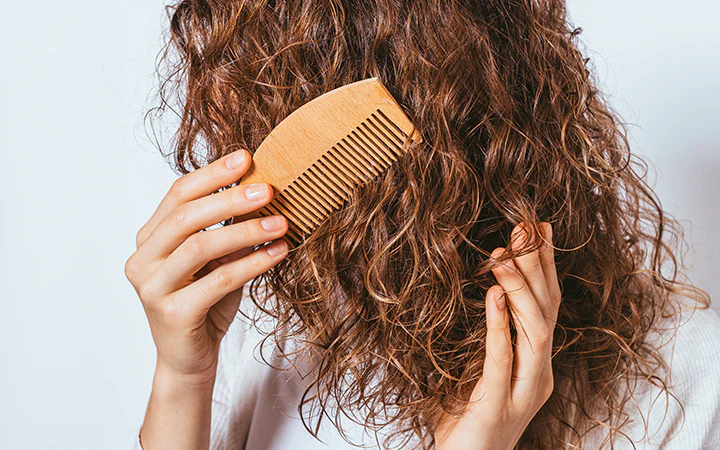
Curly hair is naturally beautiful, but it often comes with the challenge of frizz, dryness, and unpredictable volume. Frizz occurs when hair cuticles lift and absorb excess moisture from the environment, leaving curls looking unruly. Maintaining curly hair requires a combination of proper care, the right products, and styling techniques that enhance your natural curl pattern.
This article provides a comprehensive guide on how to care for curly hair, prevent frizz, and keep curls healthy, defined, and manageable.
Understanding Curly Hair
Curly hair is prone to dryness because natural oils from the scalp have a harder time traveling down the hair shaft. Factors such as humidity, heat styling, and harsh products can exacerbate frizz. Understanding your hair type—loose curls, tight coils, or waves—will help you select the right techniques and products for maintenance.
Gentle Cleansing for Curly Hair
Washing curly hair requires a careful approach to avoid stripping natural oils:
- Use sulfate-free shampoos: Sulfates can be harsh and dry out curls.
- Co-washing: Washing hair with conditioner instead of shampoo helps retain moisture and reduce frizz.
- Avoid daily washing: Washing 1–3 times per week prevents over-drying.
Gentle cleansing preserves natural oils that keep curls soft and defined.
Deep Conditioning and Hydration
Moisture is key to preventing frizz. Curly hair thrives on hydration, so deep conditioning is essential:
- Use rich conditioners or hair masks weekly.
- Look for ingredients like shea butter, coconut oil, argan oil, and aloe vera.
- Apply conditioner from mid-lengths to ends to avoid weighing down roots.
Regular deep conditioning helps curls maintain elasticity, shine, and smoothness.
Drying Techniques to Prevent Frizz
How you dry curly hair plays a major role in frizz control:
- Microfiber towel or T-shirt drying: Avoid rough towels that cause friction.
- Plopping method: Wrap hair in a soft cotton T-shirt to enhance curl definition while reducing frizz.
- Air-drying vs. diffusing: Air-drying is gentler, but a diffuser on low heat can add volume and shape without disrupting curls.
Patience during drying is essential to achieve frizz-free curls.
Styling Products for Defined Curls
Using the right products ensures curl definition and reduces frizz:
- Leave-in conditioners: Provide continuous hydration.
- Curl creams and gels: Enhance natural curl shape while holding moisture.
- Anti-frizz serums: Seal the hair cuticle to prevent moisture from causing frizz.
Apply products to damp hair, starting from ends upward, and scrunch curls gently to encourage shape.
Protective Hairstyles
Certain hairstyles help maintain curl integrity and minimize frizz:
- Loose braids or twists: Protect curls during sleep and reduce tangling.
- Pineapple method: Gather hair on top of your head with a scrunchie to preserve curl shape overnight.
- Silk or satin scarves/pillowcases: Reduce friction and prevent frizz while sleeping.
Protective methods are particularly useful for longer or more fragile curls.
Avoiding Heat Damage
Heat styling can dry out curls and make frizz worse:
- Limit flat irons and blow dryers.
- If heat is necessary, use a heat protectant spray.
- Opt for air-dried curls whenever possible.
Healthy curls start with minimal heat exposure to retain natural texture and moisture.
Regular Trims for Healthy Curls
Trimming curly hair every 8–12 weeks prevents split ends, which can make curls look frizzy and unkempt. Regular trims also help maintain the natural shape of your curl pattern and avoid uneven volume.
Nutrition and Hair Health
Healthy curls come from both the inside and outside:
- Drink plenty of water to keep hair hydrated.
- Eat a balanced diet rich in protein, omega-3 fatty acids, and vitamins to strengthen hair.
- Consider supplements like biotin or vitamin E if recommended by a healthcare provider.
Proper nutrition supports stronger, shinier, and more resilient curls.
Learning From Other Hair Types
While curly hair care differs from thin and fine hair, some concepts overlap. For example, in the same way people explore Best Hairstyles for Thin and Fine Hair to add structure and volume, curly-haired individuals benefit from haircuts that enhance natural curl patterns and manage frizz effectively. Layered or shaped cuts can prevent curls from looking flat or undefined.
Conclusion
Maintaining curly hair without frizz requires a combination of hydration, gentle care, proper styling, and regular trims. By using the right products, drying carefully, protecting curls during sleep, and nourishing hair from within, frizz can be significantly reduced while natural curl definition is enhanced.
With consistent care and the correct techniques, curly hair can look healthy, bouncy, and beautifully defined, making frizz-free curls an achievable goal for everyday styling.