
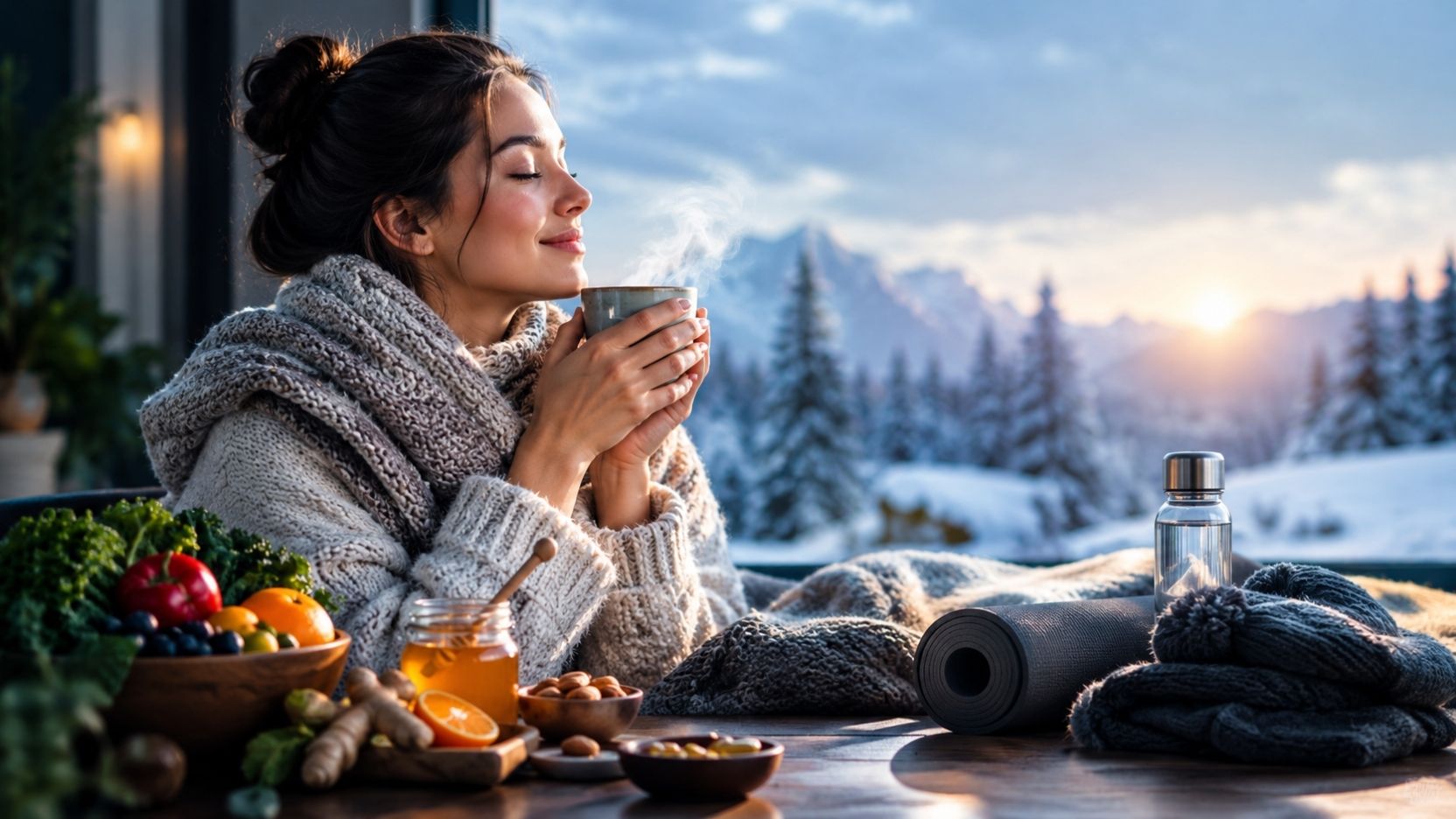
Winter wellness means looking after your body and mood during the cold months. The core habits are well supported: get your seasonal vaccines, wash your hands, sleep enough, keep moving, eat real food, and get daylight. Teas, elixirs, retreats, and supplements can add comfort. They do not replace those basics. This guide explains what works, what is uncertain, and what to skip.
What does “winter wellness” actually mean?
The phrase is used in several different ways. That is why the search results look so mixed. Some people mean daily habits. Others mean a book, a herbal product, a spa service, or even a city name.
| Meaning | Example | What to know |
| Self care habits | Sleep, movement, food, daylight | Strongest evidence, lowest cost |
| A cookbook | Winter Wellness by Rachel de Thample | Food focused, not medical treatment |
| A product line | Comvita Winter Wellness elixir | Honey based supplement, check the label |
| A service | Acupuncture, massage, retreats | Quality and evidence vary |
| A place name | Winter Park, Winter Garden, Winter Haven | Florida cities, not a wellness topic |
Knowing which meaning you need saves time. The rest of this guide covers each one.
See More: Occupational Wellness Definition
Why does winter strain the body and mood?
Winter changes several things at once. Days get shorter. People spend more time indoors. Air gets drier. Routines shift around holidays, travel, and weather. Each change is small. Together they can wear you down.
How does less daylight affect you?
Daylight helps set your internal body clock. When mornings are dark, many people feel groggy, sleep poorly, and lose energy. Some develop a more serious seasonal pattern of depression, covered below.
A simple fix helps many people. Get outside within an hour or two of waking. Even a cloudy sky is brighter than most indoor rooms. Sit near a window when you cannot get out.
Does cold weather cause colds?
Not directly. Viruses cause colds and flu. Cold weather matters mostly because of what we do in it. We gather indoors, share air, and spend less time outside.
Dry indoor air may also make nasal passages less comfortable. That is one reason humidity and ventilation come up often in winter health advice.
What happens to your skin in winter?
Cold air and indoor heating pull moisture from skin. Hands, lips, and shins often suffer first. Hot showers make it worse.
A few habits help:
- Use lukewarm water, not hot.
- Apply a thick moisturizer within minutes of bathing.
- Wear gloves outdoors.
- Use lip balm with sunscreen if you are in snow or bright glare.
Which winter health habits have the strongest evidence?
Start here before buying anything. These habits are boring, and they work. Most come from public health agencies rather than wellness marketing.
Should you get your vaccines before winter peaks?
For most people, yes. The CDC recommends an annual flu vaccine for most people aged 6 months and older, according to a Johns Hopkins Medicine summary of the 2026 to 2027 recommendations. Flu season starts near the end of October, so earlier vaccination is encouraged.
The vaccine formula changes each year. All three virus components of the 2026 to 2027 U.S. flu vaccines were updated, including a change aimed at the H3N2 subclade K virus that spread widely last season. That is one reason last year’s shot does not carry over.
Timing matters too. For most people, September or October is ideal, though vaccination continues to make sense throughout the season while flu viruses circulate.
Some points to keep in mind:
- Adults 65 and older are advised to prefer a high dose, recombinant, or adjuvanted vaccine when available.
- Young children who have never been vaccinated may need two doses.
- People with an egg allergy can generally receive any age appropriate flu vaccine.
- COVID 19 and RSV recommendations differ by age and risk group, and they change.
Ask a pharmacist or clinician which shots fit you. Official guidance is updated often, so check the CDC website for the latest.
How much do handwashing and staying home really matter?
A lot. Washing with soap and water for at least 20 seconds is the CDC’s long standing advice. When soap is not available, a hand sanitizer with at least 60% alcohol is the usual fallback.
Staying home when you are sick matters just as much. It protects coworkers, classmates, and older relatives. Many people feel pressure to push through. That pressure is how winter illness spreads.
How much sleep do you need in winter?
Most adults need seven or more hours a night. Winter makes this harder, because dark evenings tempt people toward late screens and irregular bedtimes.
Try these steps:
- Keep a steady wake time, even on weekends.
- Get morning light.
- Dim lights in the last hour before bed.
- Keep the bedroom cool, dark, and quiet.
- Limit alcohol near bedtime, since it fragments sleep.
Can you stay active when it is cold and dark?
Yes, with a plan. Federal activity guidelines suggest adults aim for about 150 minutes of moderate activity each week. They also suggest muscle strengthening on two days.
That works out to roughly 20 to 30 minutes a day. You do not need a gym. Brisk walking, stairs, bodyweight exercises, and home videos all count.
One caution: shoveling heavy snow is hard on the heart. If you have heart disease or other risk factors, ask your doctor first. Take breaks and push smaller loads.
What should you eat in winter?
There is no magic winter diet. The best approach is plain and practical. Build meals around vegetables, beans, whole grains, fish, eggs, nuts, and lean proteins. Warm soups and stews make this easy.
Winter produce is worth using. Cabbage, carrots, squash, citrus, beets, and root vegetables are cheap and widely available in the United States. Frozen vegetables are a good choice too.
Holiday sweets and alcohol are fine in moderation. They work against you when they crowd out meals and sleep.
Is it the winter blues or seasonal affective disorder?
Many people feel a little flat in winter. That is common and usually mild. Seasonal affective disorder, or SAD, is different. It is a form of depression with a seasonal pattern.
SAD is a type of depression that occurs at a certain time of year, usually winter, and symptoms usually build slowly in late autumn and winter. A smaller group experiences it in summer instead.
| Feature | Winter blues | Seasonal affective disorder |
| Mood | Mildly low or restless | Persistently low most days |
| Daily life | Still manageable | Work, school, or relationships suffer |
| Sleep and energy | Slightly off | Major changes, heavy fatigue |
| Interest in activities | Dips but returns | Marked loss of interest |
| Best next step | Self care, light, activity | See a health professional |
A health professional makes the diagnosis. Do not self diagnose from a checklist.
What treatments help seasonal affective disorder?
Several options have good support. The NIMH notes that light therapy has been used for SAD since the 1980s, and that a form of cognitive behavioral therapy adapted for SAD was found to be about as effective as light therapy in comparison studies. Antidepressant medicine is another option for some people.
Light therapy uses a special lamp. Light boxes are often described as 2,500 to 10,000 lux, used for 30 to 45 minutes daily from autumn to spring. Medical sources note a few cautions:
- People who take medicines that increase light sensitivity, such as certain psoriasis medicines, antibiotics, or antipsychotics, should not use light therapy.
- An eye checkup is recommended first.
- Improvement usually shows within 3 to 4 weeks if it is going to help.
- Treatment often starts in early fall, before symptoms begin.
Vitamin D is often suggested for SAD. The evidence is less clear. The NIMH describes the link as a misconception because research on vitamin D for SAD has produced mixed results.
If you have thoughts of harming yourself, call or text 988 in the United States. In an emergency, call 911.
Do you need vitamin D in winter?
Maybe. It depends on your diet, skin, health, and where you live. Winter sun is weaker in much of the U.S., and people cover up outdoors. Many get less vitamin D from sunlight in these months.
Here are the standard intake numbers. The RDA is 600 IU a day for adults up to age 70 and 800 IU for older adults. The tolerable upper limit for adults is 4,000 IU a day.
Food sources include fatty fish, egg yolks, and fortified milk or cereals. Many people take a supplement in winter. That can be reasonable.
Do not guess at high doses. Taking too much can raise blood calcium. Routine blood testing is not recommended for healthy adults without symptoms or risk factors. If you suspect a deficiency, ask your clinician.
See More: Environmental Wellness Examples
Do herbs, honey, teas, and elixirs help?
Some bring comfort. A few have modest evidence. None replace vaccines, rest, or medical care. Be skeptical of any product that promises to “boost” or “prevent” illness.
What is the evidence on common cold remedies?
| Remedy | What reviews suggest | Main caution |
| Honey | May soothe cough, mainly in children over 1 | Never for infants under 12 months |
| Echinacea | Results are inconsistent across studies | Allergy risk, especially with ragweed allergy |
| Zinc lozenges | May shorten colds slightly if started early | Nausea; avoid zinc nasal sprays |
| Vitamin C | Regular use does not prevent colds for most people | May modestly shorten duration |
| Warm fluids | Soothing and hydrating | Watch added sugar |
The evidence for these is modest. Treat them as comfort measures.
What is the Comvita Winter Wellness elixir?
Comvita is a New Zealand honey company. Its Winter Wellness line is a honey based elixir. Retail listings describe a blend that includes manuka honey and propolis. One Irish retail listing shows 10% UMF 10+ manuka honey, propolis, and zinc.
Formulas differ by country. An Australian or New Zealand version may list echinacea instead of zinc. Always read the label on the exact bottle you buy.
Some practical points:
- Propolis can cause allergic reactions. The label warns of possible severe reactions and says to stop use if mouth or throat swelling or irritation occurs.
- Honey is sugar. One Comvita elixir lists about 74 grams of sugars per 100 ml.
- Pregnant or breastfeeding women are told to ask a health professional first.
- Age limits on the label should be followed.
Are herbal teas useful in winter?
They are pleasant, hydrating, and easy to make part of a routine. Ginger, peppermint, chamomile, and lemon with honey are common choices. Warm liquids can soothe a sore throat, even if they do not cure anything.
Herbs are not always harmless. St. John’s wort, for example, interacts with many prescription drugs. If you take medicine, check with a pharmacist before adding herbal products.
Do essential oils help with winter wellness?
Oils like eucalyptus, peppermint, and lavender smell pleasant. A diffuser can make a room feel calmer. Evidence that oils prevent or treat illness is limited.
Safety matters more than hype:
- Do not swallow essential oils.
- Dilute them before skin use.
- Keep them away from young children and pets.
- Ventilate the room.
What is inside Rachel de Thample’s Winter Wellness book?
Winter Wellness: Nourishing Recipes to Keep You Healthy When It’s Cold is a cookbook by Rachel de Thample. Retail listings show it was published by Bloomsbury on October 26, 2023, as a 304 page hardback. The publisher describes it as recipes and simple tips to support the immune system and mental health through colder months.
The book leans on herbs, spices, winter produce, ferments, and homemade condiments. Recipes named in publisher descriptions include a dandelion and burdock ramen, parsnip toddy, carrot miso mac, banana bread blinis, tahini porridge, homemade bitters, nutmeg nog, and orange and ginger date cake.
On the author, publisher notes say she has worked in kitchens including those of Marco Pierre White and Heston Blumenthal, and teaches preserving and fermentation at River Cottage in Devon. One retailer’s author note also describes the book as a finalist for best cookbook. The text I saw did not name the award, so treat that detail with care.
Two honest limits apply. It is a food book, not a medical guide. And it was published in the United Kingdom, so U.S. availability and pricing vary by retailer. Check your preferred bookseller.
Where does acupuncture fit in winter wellness?
Acupuncture is popular in winter for pain, stress, and general tune ups. Evidence depends on the condition.
An NIH review of complementary approaches for pain found support for acupuncture in some conditions. These included acupuncture for back pain and for knee osteoarthritis pain. Not everyone agrees, though. One systematic review of reviews concluded the evidence for chronic pain was conflicting and inconclusive, partly because of weak trial design.
I did not find reliable evidence that acupuncture prevents colds or flu. Be wary of that claim.
If you try it:
- Choose a licensed practitioner and check your state license.
- Confirm they use sterile, single use needles.
- Tell them about blood thinners, pregnancy, and pacemakers.
- Ask what you can realistically expect, and over how many visits.
- Keep seeing your regular doctor for ongoing problems.
Are winter wellness retreats, workshops, and festivals worth it?
They can be. A retreat gives you time away, structure, and often good food. Workshops can teach practical skills like cooking, breathwork, or gentle movement. Festivals and summits offer community.
I did not verify individual events in cities like Fort Worth, Berkeley, or Massachusetts. Dates, prices, and quality change often. Check each organizer directly.
Before you pay, ask these questions:
- Who leads the program, and what are their credentials?
- What is included, and what costs extra?
- What is the refund policy?
- Does it make medical promises?
- Is it suitable for your health and fitness level?
Red flags include guaranteed cures, pressure to stop medication, and vague claims about “detox.” A good program will welcome questions.
Why do searches pair winter wellness with Winter Park, Winter Garden, and Tallahassee?
Mostly because of names. Winter Park, Winter Garden, and Winter Haven are Florida cities, so “Winter Park wellness center” is a local search for a clinic or spa. It has nothing to do with the cold season.
One Winter Park result I found was a health and fitness facility that opened in April 2019. Local listings of this kind change, so confirm hours and services directly.
Tallahassee is a similar case. Searches there usually look for clinics and practitioners. For example, a WebMD directory listing for a Tallahassee practice called Medical Healing Center showed no patient reviews when I checked. A local magazine profile says it was founded in 1999 by Angela Myers, APRN.
I could not verify anyone named Aida Winter in connection with these services. Because of that, I have not attributed any facts to that name.
When you research a local provider:
- Check the state licensing board.
- Read reviews on several platforms, not just one.
- Look for patterns, not single complaints.
- Confirm insurance coverage before booking.
How can employees and employers support winter wellness at work?
Workplaces are where winter illness spreads fast. Small policies make a real difference.
What can employees do on their own?
- Take a daylight walk at lunch.
- Keep hand sanitizer and tissues at your desk.
- Stay home when you are clearly sick.
- Use scheduled breaks to stand and stretch.
- Plan simple lunches so you avoid vending machine meals.
- Use your employee assistance program if stress is high.
What can employers do?
| Action | Why it helps |
| Host an on site flu shot clinic | Makes vaccination easy |
| Offer flexible sick leave | Reduces sick people coming to work |
| Improve ventilation and cleaning | Lowers shared germ exposure |
| Allow flexible hours in dark months | Helps people use daylight |
| Promote mental health benefits | Supports staff with seasonal low mood |
| Encourage walking meetings | Adds movement without a gym |
Employers should avoid unrealistic goals. A single wellness week will not fix a stressful culture.
What does a simple winter wellness plan look like?
Do not change everything at once. Add one habit at a time. The plan below spreads effort over a month.
| Week | Focus | Small action |
| Week 1 | Prevention | Book vaccines and stock soap and tissues |
| Week 2 | Sleep and light | Set a steady wake time and get morning daylight |
| Week 3 | Movement | Schedule three 20 minute walks or home workouts |
| Week 4 | Food and mood | Cook two big pots of soup and plan one social event |
After a month, keep what works and drop what does not. The best plan is the one you will actually follow.
Which winter wellness activities feel enjoyable, not like chores?
Wellness lasts when it feels good. Try a few of these:
- A weekly soup night with friends or family.
- A sunrise or sunset walk in the cold, dressed warmly.
- A new hobby, such as knitting, baking, or drawing.
- Warm baths on dark evenings.
- Stretching or gentle yoga before bed.
- A board game or puzzle night without screens.
- Visiting a library or local museum.
- Volunteering, which supports mood and community.
- A winter hike, with proper footwear and a plan.
- A phone call or video chat with someone far away.
Social connection is easy to lose in winter. Put plans on the calendar early.
Which winter wellness kits and must haves are worth buying?
Kits are popular as gifts. Names like Pinch Provisions, Wishgarden, and others appear in searches. I did not test or evaluate any specific kit, so I cannot rate them.
Instead, here is a way to judge any kit:
- Check every ingredient against your allergies and medicines.
- Look for clear dosing and age limits.
- Be cautious about disease claims.
- Compare the price with buying the items separately.
- Check expiration dates and return policy.
A practical home list often costs less than a kit:
- A thermometer
- Tissues and lip balm
- Moisturizer
- Warm socks and layers
- Hand soap
- Tea, honey, and soup ingredients
- A cool mist humidifier, if your air is very dry
- A carbon monoxide detector
If you use a humidifier, clean it as the maker directs. The EPA suggests keeping indoor humidity between 30% and 50%, since damp air can encourage mold.
How do you stay safe from winter hazards?
Wellness also means avoiding emergencies. Cold weather brings predictable risks.
- Carbon monoxide. Install detectors on each level. Never run a generator or grill indoors. Never heat a home with a gas oven.
- Space heaters. Keep them away from anything flammable. Plug them directly into a wall outlet.
- Hypothermia and frostbite. Dress in layers. Cover your hands, ears, and face. Watch for shivering, confusion, numb skin, and slurred speech.
- Ice and falls. Wear shoes with good grip. Walk slowly and use handrails.
- Driving. Keep a blanket, flashlight, and phone charger in the car.
Older adults and young children need extra attention in cold weather.
When should you see a doctor?
Do not wait it out if something seems serious. Seek care promptly for:
- Trouble breathing or chest pain
- Confusion or severe drowsiness
- Signs of dehydration, such as very little urine
- A fever that returns or lasts several days
- Symptoms that improve and then suddenly worsen
- Low mood that lasts for weeks or affects daily life
For thoughts of suicide, call or text 988 in the United States. Call 911 for emergencies.
The short version
Winter wellness is mostly simple. Get vaccinated on time. Wash your hands. Sleep enough. Keep moving. Eat warm, real meals. Seek daylight, and take low mood seriously.
Extras like teas, honey elixirs, books, acupuncture, and retreats can be enjoyable. Judge them honestly. Check labels, credentials, and evidence. Start with one or two habits this week, and build from there.
See More: Wellness Goals
Frequently Asked Questions
What is winter wellness?
Winter wellness is caring for your physical and mental health during cold months. It covers vaccines, hygiene, sleep, activity, nutrition, daylight, and stress management. The phrase is also used for books, products, and services, so context matters.
What are the best winter wellness tips?
Get your flu shot, wash your hands, sleep seven or more hours, and stay active. Eat vegetables, get morning daylight, and stay home when sick. These simple habits have stronger support than most supplements.
When should you get a flu shot?
For most people, September or October is ideal, according to CDC guidance. Getting vaccinated later is still worthwhile while flu viruses are circulating. Ask your pharmacist or doctor which vaccine suits your age and health.
Do vitamin D supplements help in winter?
They can help people who get little sun and low dietary vitamin D. The adult RDA is 600 IU, rising to 800 IU after age 70. Avoid high doses without medical advice.
How do I know if I have seasonal affective disorder?
SAD involves low mood, low energy, and loss of interest that return each winter. Only a health professional can diagnose it. See one if symptoms last for weeks or disrupt work, school, or relationships.
Does light therapy really work?
Light therapy is an established treatment for seasonal affective disorder, per NIMH. Improvement usually appears within a few weeks. Talk to a doctor first, especially if you take light sensitizing medicines or have eye conditions.
Is the Comvita Winter Wellness elixir safe for everyone?
No. It contains honey and propolis, which can cause allergic reactions. Pregnant or breastfeeding women should ask a health professional first. Follow the age limits and directions printed on your bottle.
Is Rachel de Thample’s Winter Wellness book available in the U.S.?
It was published by Bloomsbury in the United Kingdom in October 2023. U.S. availability depends on the retailer. Check major booksellers or order through a local bookstore. It is a recipe book, not medical advice.
Can acupuncture boost the immune system?
I did not find reliable evidence that it prevents colds or flu. Evidence is stronger for some pain conditions, such as back pain and knee osteoarthritis. Choose a licensed practitioner and keep seeing your doctor.
What are good winter wellness tips for employees?
Take a daylight walk, stay home when sick, and keep hand sanitizer nearby. Use breaks to move and plan simple lunches. Employers can help with flu clinics, flexible sick leave, and better ventilation.
Are winter wellness retreats worth the money?
They can be, if the program is transparent and realistic. Ask about leaders’ credentials, inclusions, refunds, and health suitability. Avoid retreats that promise cures or discourage medical care.
Are Winter Park and Winter Garden wellness centers related to winter wellness?
No. Winter Park, Winter Garden, and Winter Haven are Florida cities. Searches using those names usually look for local clinics, spas, or fitness centers. Verify each provider’s services, license, and reviews directly.