
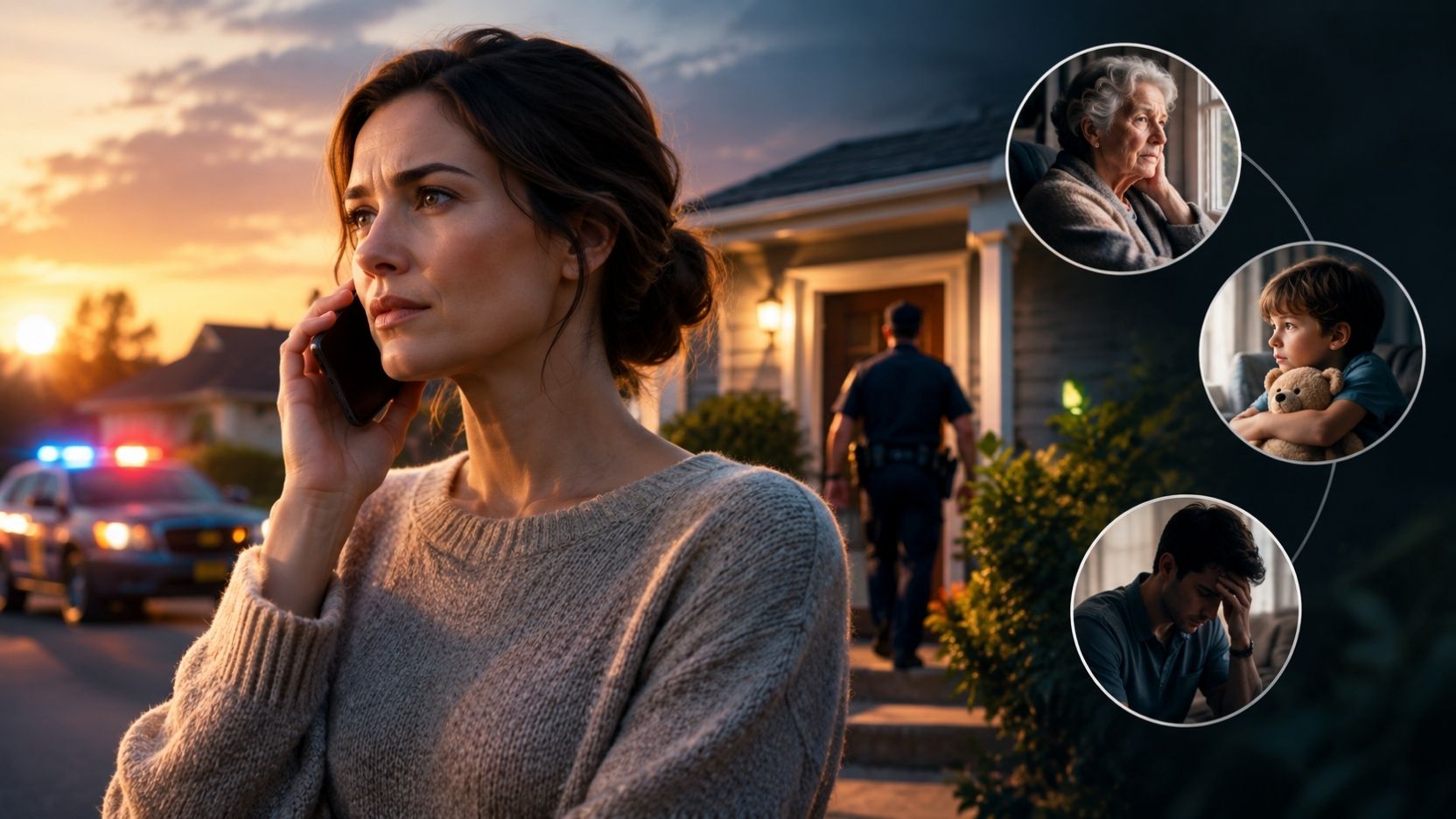
To do a wellness check, first try to reach the person yourself. If you can’t, and you fear for their safety, call the local police or sheriff’s non emergency line and ask for a wellness check, also called a welfare check. Give the person’s name, address, and the reason for your worry. If you believe someone is in immediate danger, call 911 instead.
The sections below cover each situation, from checking on a neighbor to reaching someone in another state or in jail.
What Is a Wellness Check, and Who Actually Does It?
A wellness check is a request for someone trained to visit a person and confirm they are safe. Most often, the visit is made by a police officer or sheriff’s deputy. The terms “wellness check” and “welfare check” mean the same thing in everyday use.
Officers go to the person’s home or last known location. They try to make contact, look for signs of trouble, and call for medical help if needed. They are not there to investigate you or the person.
Police are not the only option. Depending on where you live, a wellness check may also involve:
- Mobile crisis teams for mental health emergencies
- Adult Protective Services for older or vulnerable adults
- Child Protective Services for children
- Property managers or employers, who may have keys or emergency contacts
- Fire or emergency medical services when a medical problem is likely
The right responder depends on the person’s age, the risk, and what your community offers. Police are simply the most widely available.
See More: What Is A Wellness Center
When Is It Time to Ask for One?
You know the person best. Some signs are clear, while others are just a feeling that something is off.
Common reasons people request a wellness check include:
- A person who always answers has gone silent for an unusual length of time
- Mail, packages, or newspapers are piling up
- Lights have stayed on or off for days, or a car hasn’t moved
- The person has a known medical condition and missed a regular check in
- They sent a worrying message about hurting themselves
- A child seems unsafe, unsupervised, or neglected
- An older relative with memory problems is not answering
- A coworker has not shown up or called in, which is out of character
A single missed call is rarely a reason to panic. A pattern, or a missed contact combined with a known risk, is different.
The table below can help you decide how urgent your situation is.
| Situation | How Urgent It Is | Best First Step |
| Someone threatens suicide or you see an attempt in progress | Emergency | Call 911 |
| You hear a fall, screaming, or a struggle | Emergency | Call 911 |
| A friend with a heart condition is unreachable and not answering the door | High | Call 911 or the local non emergency line, and state the medical risk |
| A parent has not answered for a day or two | Moderate | Contact neighbors, then call the non emergency line |
| A neighbor’s mail has piled up for several days | Lower | Knock, call, then use the non emergency line |
| A coworker missed work with no word | Lower to moderate | Call their emergency contact, then the non emergency line |
When in doubt, treat the risk as higher, not lower. It is far better to make a call that turns out unnecessary than to wait on a real emergency.
What Should You Try Before Calling the Police?
Many wellness checks end happily, with the person simply having a dead phone battery. A few quick steps can resolve your worry without involving anyone else. They also give police better information if you do need to call.
Try these in a sensible order:
- Call and text, and leave a clear voicemail asking them to respond.
- Message them on social media or any app they use.
- Call mutual friends, relatives, and coworkers.
- Ask a neighbor or building manager to knock or look.
- Check for recent posts or activity online that show they are okay.
- Call hospitals only if you have a specific reason to think they were taken there.
Do not spend hours on this if the situation seems dangerous. If you have reason to fear for their life, skip ahead and call right away.
How Do You Request a Wellness Check, Step by Step?
The process is simple, though the details depend on your local agency. Here is what to do.
First, decide whether to call 911 or a non emergency number
Use 911 when there is an immediate threat to life or safety. That includes a suicide threat, a medical emergency, signs of violence, or a child in danger right now.
Use the non emergency line when the concern is real but not urgent. A relative who hasn’t answered for a day, without any warning signs, is a typical example.
If you are unsure, call 911 and explain. Dispatchers are trained to sort out the urgency and may transfer you.
Then find the correct number
Call the police or sheriff’s office that covers where the person is, not where you are. That is the most common mistake people make.
Cities usually have a police department. Unincorporated areas are generally covered by the county sheriff. Some places use a general number, such as 311, for non emergency city services.
New York City is a clear example. According to the NYPD, 911 is for emergencies and 311 is the non emergency number.
If you are not sure which agency to call, search for the person’s city or county plus the words “police non emergency number.” Then confirm it on the official government website, not a directory site.
Next, say what you know in a clear order
Dispatchers handle many calls. Short, organized information helps them prioritize your request.
Be ready to share:
- The person’s full name, age, and physical description
- The exact address, with an apartment number and nearest cross street
- Why you are worried, and when you last had contact
- Medical conditions, medications, or mental health concerns
- Whether the person lives alone
- Any weapons in the home or recent threats
- The person’s car, workplace, or places they usually go
- Your name and callback number
Lead with the reason for your concern. A line like “My mother is 82, has diabetes, and hasn’t answered in two days” tells the dispatcher what matters most.
Mention any risk to officers too, such as a known history of aggression or firearms in the home. This helps keep everyone safe.
Finally, ask what happens next
Before you hang up, ask three things:
- Will someone be sent now?
- Will you be updated afterward?
- Is there a reference number for this call?
Write down the dispatcher’s name or ID number if they provide one. Keep your phone nearby and answer unknown numbers, since officers may call you for more details.
Can you request a welfare check online?
Some agencies take non emergency reports through an online form or mobile app. This is uncommon for wellness checks specifically, because speed matters and dispatchers often need to ask questions.
Check your local department’s website to see what it offers. If you can’t find a form, call. Never use an online form when someone may be in immediate danger.
What If You Don’t Have the Person’s Address?
This is common, especially with friends you met online or relatives who recently moved. Call anyway.
Give the dispatcher everything you do have. That may include the last known address, the city, a phone number, a workplace, the name of their landlord, or a vehicle description.
Some details can speed things along:
- Their full legal name and date of birth
- The last place you saw or spoke to them
- The names of roommates, partners, or relatives
- Any recent photo you can share
- Messages that hint at where they were
In a serious emergency, agencies may have additional ways to locate a person. Those tools depend on local policy, the situation, and legal limits, so don’t count on them. Ask the dispatcher what they can do, and gather any address clues you can from mutual contacts.
If the person is a minor or may be in danger, say so immediately. That changes how a case is handled.
Can You Ask for a Wellness Check Anonymously?
In many places, yes. Most agencies will take a call without requiring your name, since they care more about the person’s safety than about who raised the concern.
There are trade offs. If you stay anonymous, officers can’t call you back with questions, and you may not be told what they found. Dispatch systems may also capture your phone number automatically, so true anonymity is not guaranteed.
If anonymity is important, such as when you fear retaliation, say so at the start of the call. Ask how the agency handles caller information.
For concerns about a child, many child protection hotlines accept anonymous reports. Policies vary by state, so ask when you call.
How Long Does a Wellness Check Take?
There is no single answer. Response time depends on how serious the situation sounds and how busy the agency is.
- A call with clear signs of danger can get officers there within minutes.
- A lower risk request may wait while higher priority calls are handled, sometimes hours.
- After officers arrive, the visit itself is often short, but searching a building or arranging medical help can take much longer.
The more specific your information is about the risk, the faster most agencies will treat the request. A vague “I haven’t heard from my brother” is typically a lower priority than “my brother texted that he wants to die.”
How long should you wait before asking for one?
You don’t need to wait a set number of hours. There is no universal waiting period for requesting a welfare check, and a common belief that you must wait 24 hours is a myth.
What matters is the risk. For a healthy adult who sometimes goes quiet, a day or two may be reasonable. For someone who is ill, elderly, in crisis, or a child, call as soon as you are seriously worried.
What Actually Happens When Officers Arrive?
Knowing what to expect can ease your mind, and it helps you prepare the person if they know it’s coming.
Officers typically start by knocking and announcing themselves. They try to speak with the person and ask whether they are okay. They may check windows, listen for sounds, talk to neighbors, or contact a property manager.
If the person answers and says they are fine, the officers will usually verify that and leave. If nobody responds and signs of danger exist, the situation can escalate.
Can police enter the home without permission?
Sometimes. No court order is needed for a welfare check, and police can enter a home if they have reasonable grounds to believe someone inside is in danger.
This falls under what courts call the emergency aid exception to the warrant requirement. In Brigham City v. Stuart (2006), the U.S. Supreme Court held that officers may enter a home without a warrant when they reasonably believe someone inside needs immediate aid.
In Caniglia v. Strom (2021), the Court made clear that a broader “community caretaking” idea does not by itself justify entering a home. The emergency aid exception remains in place. In practice, officers need a reasonable belief that someone is in immediate danger.
That is why details matter. A specific warning sign, like a medical condition or a threatening message, helps officers justify a forced entry if they must.
Can the person refuse the check?
A competent adult generally can decline to talk or to open the door. Officers can’t force contact simply because someone asked for a check. They need more than your worry to enter.
If officers can see or hear signs of an emergency, the situation is different. In many cases, a person who speaks through the door and says they are safe will satisfy the officers.
What will you be told afterward?
Many agencies will tell you the outcome, such as “we made contact and the person is safe.” Others share very little for privacy reasons, especially if the person is an adult who did not consent.
If you need confirmation, ask the dispatcher whether an officer can call you back. If you haven’t heard anything after a reasonable time, call again with your reference number.
Be prepared for answers like “they were fine and did not want contact.” That outcome is common and doesn’t mean you did the wrong thing.
How Do You Do a Wellness Check on Someone in Another State or City?
Distance doesn’t stop you. You simply contact the local agency where the person physically is.
Follow these steps:
- Identify the city and county of the person’s address.
- Find the police department or sheriff’s office that covers that address.
- Call the agency’s non emergency number, or 911 if the danger is immediate.
- Say that you are calling from out of state and give your phone number.
- Share everything you know about their routine and risk.
Do not call your own local police and expect them to handle it. They can’t dispatch officers across state lines. Some departments may help you identify the right agency, though.
If you can’t tell which agency covers an address, a county government website or the sheriff’s office can usually help. Calling 911 in the area is also an option if you believe it’s an emergency, since the call will route to the correct local center.
It also helps to contact someone near the person. A neighbor, coworker, or friend nearby can often knock on the door faster than police. That can solve the problem within the hour.
How Do You Request a Wellness Check on a Child?
Children can’t speak up for themselves, so concerns about a child call for extra care. The right path depends on how urgent the situation is.
- Immediate danger: If a child is being harmed, is alone and unsafe, or is in a medical emergency, call 911.
- Suspected abuse or neglect, but not an emergency: Contact your state’s child protective services hotline. The Childhelp National Child Abuse Hotline at 800 422 4453 can also advise you on next steps and local resources.
- A child you can’t reach, such as during a custody dispute: Contact the local police non emergency line and explain the situation. Mention any court orders.
Describe what you saw or heard, in plain facts. Say the child’s name, age, address, and who else lives there. Avoid guessing about causes.
Every state has a system for reporting suspected child abuse and neglect. Many states require certain professionals, such as teachers and doctors, to report. Anyone can report, and reports made in good faith are generally protected.
For a child you believe is missing, call 911 right away. Don’t wait.
See More: Employee Wellness Ideas
How Do You Check on an Older Adult or a Vulnerable Adult?
Older adults who live alone are among the people for whom wellness checks matter most. A fall, a medical event, or confusion can leave someone unable to call for help.
Begin with the same steps as for any adult. If the person has dementia, is frail, or has a serious health condition, tell the dispatcher at once. It raises the priority.
You can also contact Adult Protective Services, which investigates suspected abuse, neglect, or self neglect of older and vulnerable adults. Every state has a program, though the name and structure vary.
The Eldercare Locator at 800 677 1116 can connect you to local aging services. It is a federal service that helps families find agencies near an older person’s home.
For long term safety, think about preventive steps too. Daily check in calls, a medical alert device, or a neighbor with a spare key can prevent a future emergency.
What About Someone in Jail or Prison?
Wellness checks work differently here. People in custody are in the care of a facility, and police are not the right contact.
Start by confirming where the person is held. Use the Bureau of Prisons inmate locator for federal custody, or the state Department of Corrections inmate search for state prisons. Many county jails post rosters on their websites, and the VINELink service tracks custody status in many areas.
Once you know the facility, take these steps:
- Call the facility’s main number and ask for the appropriate office, such as the watch commander, the warden’s office, or the health services unit.
- State your relationship to the person and describe your concern clearly.
- Say if you fear for their immediate safety, such as a threat of self harm.
- Ask about the process for family concerns, since each facility has one.
- Contact the person’s attorney if they have one.
Facilities often limit what they share because of privacy and security rules. They may not confirm medical details. They may, however, be able to check on the person and pass along that someone called.
If you believe the person faces an urgent medical or safety risk, say that first. Many facilities have staff who handle exactly these calls.
Keep a record of who you spoke with and when. If you can’t get answers, consider asking the person’s lawyer, or a state corrections ombudsman, where one exists, to follow up.
How Do You Check on a Neighbor, Friend, Family Member, or Employee?
The steps are similar, but each relationship has its own wrinkle.
A neighbor
Knock and call out. Look for obvious signs, such as a door left open or sounds of distress. Don’t enter without permission, even if you have a key, unless you have been given clear authority.
If they don’t answer and something looks wrong, call the non emergency line, or 911 if you see a serious sign. Tell the dispatcher what you observed and why it worries you.
A friend
Friends often hold the key piece of information, such as the person’s last message. Share it with the dispatcher. Also tell them about the friend’s recent mood, if relevant.
If the friend is in another city, ask someone nearby to help while you call the local agency.
A family member
Family members usually know medical history and routines, which helps. Share the person’s address, medications, and any risk factors.
If you have legal authority, such as a power of attorney, mention it. Be honest if the person has asked for distance, since that may affect how officers approach the visit.
An employee
Employers have a duty of care but also privacy limits. Start with the person’s listed emergency contact and call them directly. Document your attempts to reach the employee.
If you can’t reach anyone and have a real safety concern, contact the police non emergency line. Share only what is needed, such as their name, address, and the fact that they missed work without notice.
Keep the matter confidential. Don’t discuss it widely among coworkers.
Does the Process Change by State or City?
The core steps are the same nationwide, since wellness checks are handled locally. Cities and counties set their own policies, and there is no single national system.
The table below shows how a few places handle the basics. Always confirm the current number with your local government.
| Location | Emergency | Non Emergency Option | What To Know |
| New York City | 911 | 311, according to the NYPD | Requests are handled by the precinct covering the address |
| Washington, D.C. | 911 | Check the Metropolitan Police Department website for the current non emergency number | The District has its own city government services line, so confirm which number applies to police requests |
| Georgia | 911 | Varies by city or county | Call the city police or county sheriff for the address |
| Florida | 911 | Varies by city or county | Sheriffs cover many unincorporated areas |
| Texas | 911 | Varies by city or county | Large cities and county sheriffs may both handle calls, depending on the address |
For Georgia, Florida, and Texas, you won’t find one statewide wellness check number. The right agency is whichever one covers the address. When in doubt, search for the county sheriff or city police website for that specific location.
If you are trying to do a wellness check in NYC, remember that the person’s precinct matters. Your call will go to the borough or precinct that covers the address, not to the place you are calling from.
What If the Concern Is Mental Health or Suicide?
Mental health emergencies need a thoughtful approach. A police response can be the right call, but it isn’t always the best one.
If someone is in immediate danger, call 911. Say clearly that this is a mental health crisis, and tell the dispatcher what you know. Ask whether a crisis trained officer or a mobile crisis team can respond. Availability varies by community.
You can also call or text 988, the Suicide and Crisis Lifeline. Trained counselors can talk with you about how to help someone, even when you are the one worried. In many areas, 988 can connect callers to local mobile crisis services.
If the person is talking with you, here are some things that help:
- Stay calm and listen without judging
- Ask directly whether they are thinking about suicide
- Don’t leave them alone if they are in immediate danger
- Remove access to means, such as firearms or medications, if you can do so safely
- Stay on the line with them while you get help
An officer or crisis worker may assess the person during a wellness check. Depending on the state and the situation, a person who is an immediate danger to themselves or others may be taken for a mental health evaluation. The rules for involuntary holds vary by state.
This is a sensitive topic. If you are struggling personally while helping someone else, I can help you find support for yourself too.
Are There Risks, and Are There Better Options Sometimes?
It is worth being honest about this. Wellness checks save lives, but they can also go wrong. A police visit can frighten someone, especially a person in a mental health crisis.
Calling the police may not be best in every case. Consider alternatives when there is no immediate danger:
- A trusted friend or relative visiting in person
- A mobile crisis team, where one exists
- A property manager or building superintendent checking the unit
- A community outreach or senior services program
- A clergy member or counselor the person trusts
If you do involve police, you can lower the risk by providing context. Tell the dispatcher about mental health conditions, fears of police, hearing loss, language barriers, or anything else that could affect how the person responds.
You can also let the person know to expect a visit, if you are in contact. A heads up from a loved one can make the experience far less frightening.
Above all, do not let these concerns stop you from calling when you believe a life is at stake. Your judgment about the risk is what counts.
The Short Version to Take With You
A wellness check is a request for someone to visit a person and confirm they are safe. Try to reach the person first, but don’t wait if you fear for their safety. There is no required waiting period.
Call 911 for immediate danger. For other situations, call the non emergency line of the police or sheriff that covers the person’s address, wherever you are in the country.
Give clear details: name, address, reason for concern, medical or mental health factors, and your callback number. Different situations call for different contacts, including child protection hotlines, Adult Protective Services, correctional facilities, and 988.
Expect that some outcomes will be quiet. A person who is fine and a little annoyed is a good result.
See More: Corporate Wellness Coordinator
Frequently Asked Questions
What is a wellness check by police?
It is a request for officers to visit a person and confirm they are safe. Police typically knock, try to speak with the person, and call for help if there is an emergency. It is also called a welfare check.
How do I call a wellness check on someone?
Call the police or sheriff’s non emergency line for the area where the person is. Use 911 if there is immediate danger. Give their name, address, and the reason you are worried, plus your phone number.
What is the non emergency number for a welfare check?
It varies by city and county, so there is no single national number. Search for the local police or sheriff’s non emergency line on the official government website. In New York City, the NYPD lists 311 as its non emergency number.
Can you request a welfare check anonymously?
Often yes, though policies differ. Anonymous callers usually can’t get updates, and your phone number may still appear in the dispatch system. Tell the dispatcher at the start if you want to remain anonymous.
How long does it take police to do a wellness check?
It depends on the risk and how busy the agency is. Urgent calls may get a response in minutes, while lower priority requests can wait hours. Clear details about danger usually speed things up.
How long should I wait before requesting a wellness check?
There is no required waiting period. Call when you are seriously worried, especially if the person is ill, elderly, in crisis, or a child. The idea that you must wait 24 hours is a myth.
Can I request a wellness check on someone in another state?
Yes. Contact the police or sheriff’s office that covers the person’s address, not your local department. Tell them you are calling from out of state and give your callback number.
How do I do a wellness check on a child?
Call 911 if the child is in immediate danger. For suspected abuse or neglect, contact your state’s child protective services or the Childhelp hotline at 800 422 4453. Share only facts you saw or heard.
Can I get a wellness check on someone in jail?
Contact the facility directly, not local police. Use an inmate locator to find where the person is held, then call the facility and ask for the proper office. Mention any urgent safety or medical concern first.
What if I don’t know the person’s address?
Call anyway and share what you have, such as a last known address, workplace, phone number, or vehicle. Mention any urgent risk. Dispatchers will tell you what they can do with limited information.
Can police enter a home during a wellness check?
Yes, in some cases. Officers may enter without a warrant if they reasonably believe someone inside needs immediate aid. Without signs of danger, they generally can’t force their way in.
Who should I call for a mental health wellness check?
For immediate danger, call 911 and say it is a mental health crisis. You can also call or text 988 for guidance. Ask whether a crisis trained responder is available in your area.