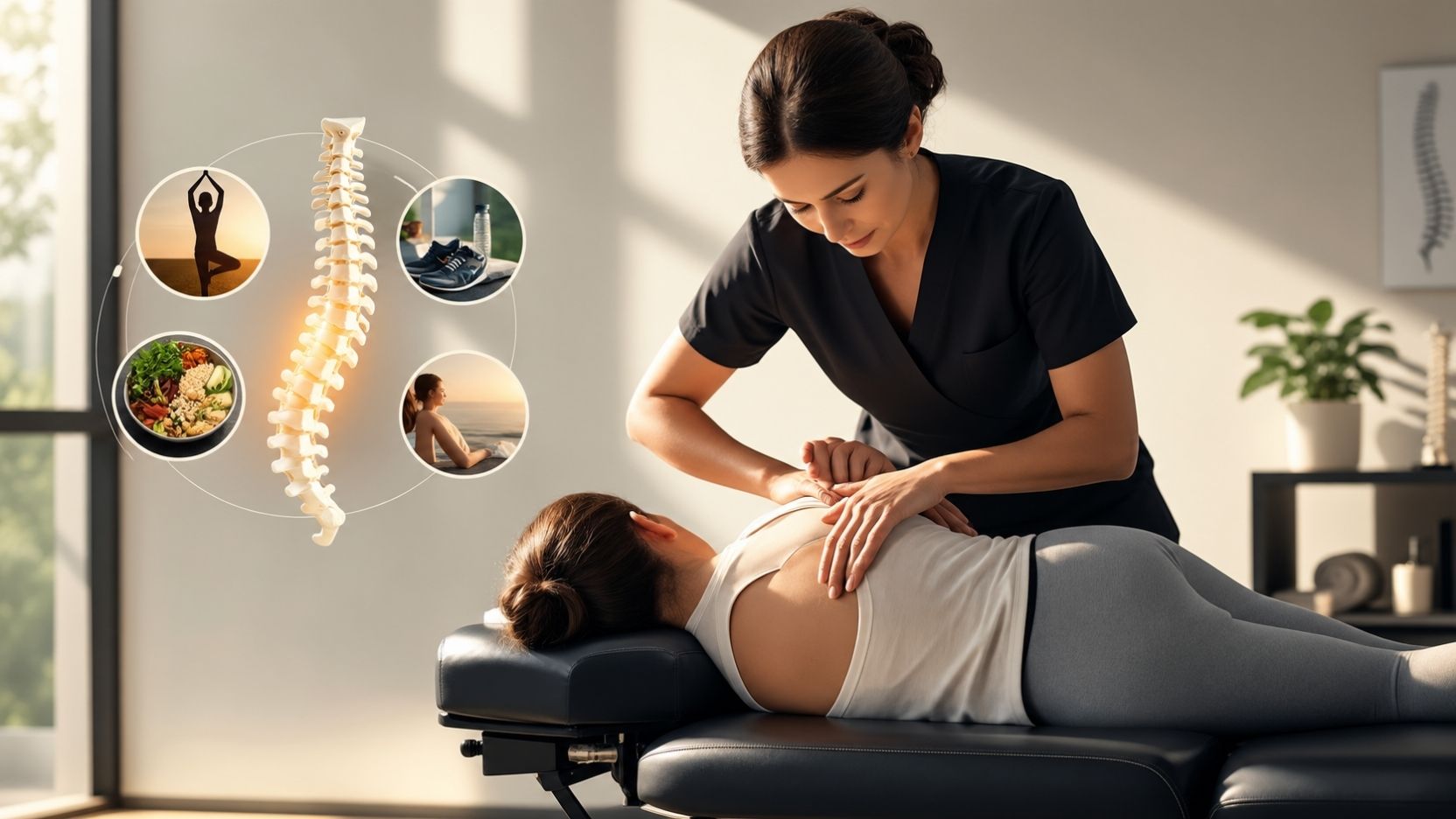

Personal wellness is the ongoing effort to make choices that improve your physical, mental, emotional, and social health. It is not a product or a single treatment. It is a habit of noticing what you need and acting on it. This guide explains what the term means, how to build a plan, and how to judge centers, coaches, and spas.
Key takeaways
- Wellness is an active process, not a finished state.
- Most models cover six to nine areas of life, not just fitness.
- A good plan has two or three small goals and a review date.
- Many “personal wellness” search results are actually insurance plans, benefit accounts, or clinics.
What does personal wellness actually mean?
People use the word for gyms, retreats, supplements, and therapy. Underneath, most definitions share one idea. Wellness is something you do, not something you have.
The National Wellness Institute describes wellness as an active process in which people become aware of their choices and move toward a more successful life. The Global Wellness Institute frames it as the active pursuit of activities, choices, and lifestyles that lead to holistic health.
Adding the word “personal” changes the meaning slightly. It says you set the priorities. A night shift nurse, a retired teacher, and a college athlete will not share the same plan, and they should not.
How is wellness different from health?
The World Health Organization defines health as complete physical, mental, and social wellbeing, not merely the absence of disease. One college course text explains the split this way: health is your state, while wellness is the active process of moving toward your best version of it.
| Term | What it describes | Example |
| Health | Your current physical, mental, and social condition | Normal blood pressure and steady energy |
| Wellness | The choices you make to protect or improve that condition | Walking after dinner, sleeping on a schedule |
| Self care | Individual acts that support wellness | A quiet evening, a stretch break, a therapy session |
| Treatment | Medical care for a diagnosed problem | Physical therapy for an injury |
Why does the definition keep changing?
Definitions vary by organization, but they share common threads: wellness is a process, it involves active pursuit, and it depends on lifestyle choices. That is why a gym, a therapist, and a meditation app can all claim to serve wellness. They are addressing different parts of the same idea.
See More: What Is Mental Wellness
Which parts of life count as wellness?
Most people think of exercise and diet first. Wellness models are wider than that. Dr. Bill Hettler, a cofounder of the National Wellness Institute, described a six sided model in 1976: emotional, occupational, physical, social, intellectual, and spiritual.
The Substance Abuse and Mental Health Services Administration (SAMHSA) uses eight dimensions: emotional, spiritual, intellectual, physical, environmental, financial, occupational, and social. Some college courses add a ninth, cultural wellness.
The exact model matters less than the connection between the parts. Every model appears to treat the components as interconnected. Poor sleep affects mood. Money stress affects sleep. A lonely week affects motivation.
| Dimension | What it covers | Everyday example |
| Physical | Movement, food, sleep, medical care | A regular bedtime |
| Emotional | Coping with stress, handling feelings | Talking to a counselor |
| Social | Relationships and community | A weekly call with a friend |
| Intellectual | Learning and creativity | Reading, a class, a hobby |
| Occupational | Meaning and satisfaction from work | Setting boundaries on overtime |
| Financial | Feeling steady about money | Building a small emergency fund |
| Environmental | The spaces and surroundings you live in | A calmer bedroom, time outdoors |
| Spiritual | Purpose, values, and meaning | Prayer, meditation, volunteering |
Some of these need a closer look. SAMHSA describes emotional wellness as the ability to cope effectively with life and build satisfying relationships. Environmental wellness connects your overall wellbeing to your social and natural surroundings. The spiritual dimension involves seeking meaning and purpose in human existence.
The framework also acknowledges that wellness is not always easy. SAMHSA notes that wellness can be compromised by lack of support, trauma, unhelpful thinking styles, chronic illness or disability, and substance use. If your wellness feels hard right now, that is not a personal failure.
Do I need to work on all eight at once?
No. Trying to improve everything at once is the fastest way to quit. Pick one to three dimensions that feel most out of balance, and start there.
How do I find out where I stand right now?
A quick self check gives you a starting point. Several public worksheets use the same method: rate yourself in each dimension, then circle one small step that feels doable.
Here is a simple version you can do in ten minutes.
- Write the eight dimensions on a page.
- Rate each from 1 (struggling) to 5 (thriving).
- Circle the two lowest scores.
- Circle one dimension you want to protect because it is going well.
- Write one small action for each circled item.
These questions help you score honestly:
- Physical: Do I usually wake up with enough energy for the day?
- Emotional: Can I name what I feel and recover from a bad day?
- Social: Do I have someone I can call when things go wrong?
- Intellectual: Have I learned or made something new this month?
- Occupational: Does my work feel sustainable, most weeks?
- Financial: Could I handle a small surprise bill without panic?
- Environmental: Does my home help me rest and function?
- Spiritual: Do my days connect to what I value?
A score is a snapshot, not a grade. Your numbers will change with seasons, jobs, and life events. That is normal.
What goes into a personal wellness plan?
A personal wellness plan is a customized strategy with goals and action steps across areas such as mental, physical, emotional, financial, environmental, and spiritual wellbeing. Providers can create one for patients. You can also write your own.
A useful plan is short. One page is enough.
Start with how you want your days to feel
Before choosing tactics, describe the outcome in plain words. “I want to feel less rushed in the morning” is a better starting point than “I will optimize my routine.” Feelings show you what to change.
Turn one priority into a goal you can measure
Vague goals fail quietly. A goal like “be healthier” cannot be checked. A goal like “walk for 20 minutes after dinner on four days a week” can.
A common test is SMART: specific, measurable, achievable, relevant, and time bound. You do not need the acronym. You need a goal you can answer yes or no to at the end of the week.
Build weekly habits, not heroic efforts
Big pushes fade. Small repeated actions last. Attach each habit to something that already happens, such as a walk after dinner or five minutes of planning after breakfast.
A simple wellness journal helps here. Write one line each evening: what you did, and how you felt. After a month, patterns become visible.
Decide how and when you will review it
One plan template recommends reviewing your plan at least every six months, or sooner when your health or lifestyle changes significantly. Many people also check in monthly. Set the date now, or it will not happen.
Here is a hypothetical example. It is an illustration, not a real person’s plan.
| Priority | Goal | Weekly action | Check date |
| Sleep | Keep a steady bedtime | In bed by 10:30 on five nights | End of month |
| Stress | Build a calming routine | Ten minutes of quiet breathing on four mornings | End of month |
| Social | Stay in touch with friends | One phone call or coffee each week | Three months |
| Financial | Start an emergency fund | Move a set amount on payday | Six months |
What are good examples of personal wellness goals?
Good goals describe actions you control, not outcomes you cannot. “Cook at home four nights a week” is better than “lose ten pounds.” Here are examples by dimension.
- Physical: Take a brisk walk for 30 minutes on five days a week.
- Emotional: Write three sentences about your day before bed, three nights a week.
- Social: Plan one in person meetup each month.
- Intellectual: Finish one book or online course each quarter.
- Occupational: Take a full lunch break away from your desk on most workdays.
- Financial: Review your spending for 15 minutes every Sunday.
- Environmental: Clear one cluttered area each weekend.
- Spiritual: Spend ten minutes on a values practice, such as journaling or quiet reflection.
If a goal feels heavy, make it smaller. Ten minutes done is better than an hour planned.
How much movement and sleep do adults need?
Two areas have clear public guidance. Both are worth knowing, even if your plan focuses elsewhere.
Adults need at least 150 minutes of moderate intensity activity each week, plus two days of muscle strengthening. The alternative is 75 minutes of vigorous activity, or an equivalent mix. You can spread the time out, and some activity is better than none.
The American Academy of Sleep Medicine and the Sleep Research Society recommend at least seven hours per night for adults aged 18 to 60. Regularly sleeping less is linked to a higher risk of conditions such as obesity, diabetes, high blood pressure, heart disease, stroke, and frequent mental distress.
| Area | Adult guidance | Good to know |
| Aerobic activity | 150 minutes moderate, or 75 minutes vigorous, weekly | Can be split into short sessions |
| Muscle strengthening | At least two days weekly | Covers all major muscle groups |
| Sleep | At least seven hours nightly for ages 18 to 60 | Needs differ for older adults |
These are general guidelines. If you have a chronic condition such as heart disease, arthritis, or diabetes, talk with your doctor about the types and amounts of activity that suit you.
See More: Wellness Retreats USA
Who can help me build and follow a plan?
You do not need help to start. Still, the right person can make a plan more realistic. The options below serve different needs.
What does a personal wellness coach do?
A coach helps you set goals, stay accountable, and work through obstacles. A coach is not a therapist or a doctor. Think of the role as behavior change support.
Titles vary widely, so credentials matter. Board certified health and wellness coaches use behavior change theory, health education, and motivational strategies to help clients make lifestyle changes. The National Board for Health and Wellness Coaching has worked with the National Board of Medical Examiners since 2016 on this certification, and it reports more than 13,000 certified coaches.
Certification generally requires completing an approved training program, logging coaching sessions, and passing an exam. Many programs also offer general wellness coaching certificates, so ask which credential a coach actually holds.
A personal trainer is a different role. Trainers focus on exercise programming. Some coaches and trainers overlap, but ask what each one is qualified to do.
When is a wellness center the right choice?
“Wellness center” is a broad label. The same words can describe very different services. Salisbury, Maryland shows how wide the range is:
- The Personal Wellness Center on Deer Point Drive is listed by CARF, an accrediting body, with mental health programs for adults and for children and adolescents.
- The Richard A. Henson Wellness Center offers exercise classes, gym equipment, and wellness assessments for people 50 and older, or any age with a disability.
- Seaside Counseling Wellness Center provides therapy and psychiatric rehabilitation, along with classes such as mindfulness and yoga.
Three centers with “wellness” in the name serve three different needs. Always read the service list, not just the name.
Where does a wellness spa fit?
A spa can be a useful part of self care. Massage, quiet time, and skin care may help you relax. They are not a substitute for medical or mental health care.
Judge a spa for what it is. If it promises to treat illness, ask for evidence and credentials.
Can my insurer or employer help?
Check before you pay for anything. CareFirst, for example, offers members a personalized digital wellness program covering physical, emotional, social, and financial wellbeing. Some employers also fund wellness accounts, which is covered below.
Wellness education is also available in classroom form. College health courses, such as one at Foothill College, teach the dimensions of wellness as a foundation for healthy living. Community programs and campus offices often run similar classes.
How do I judge a wellness center or spa near me?
Searching “near me” gives you many options and little context. A short checklist helps you compare them fairly.
| What to check | Why it matters | How to check |
| Licenses and credentials | Confirms training for the services offered | Ask for license numbers and verify with the state board |
| Accreditation | Signals outside review of quality | Look for bodies such as CARF for behavioral health |
| Clear pricing | Prevents surprise costs | Ask for a written price list |
| Realistic claims | Honest providers avoid guarantees | Be wary of cure language |
| Review patterns | Shows consistency, not just a star average | Read recent, detailed reviews |
| Privacy practices | Health information is sensitive | Ask how records are stored |
| Fit with your goals | A great spa may not serve a mental health need | Match the service to your plan |
How should I read online reviews?
Look for patterns, not perfect scores. Specific reviews that describe the service, the staff, and the outcome are more useful than short praise. Read the critical reviews too, and see how the business responds.
Be cautious if every review sounds alike or was posted in the same week. Reviews are one input. A short phone call or visit often tells you more.
What are the red flags?
- Promises of guaranteed results or cures.
- Pressure to prepay for a large package.
- Reluctance to share credentials.
- Advice to stop medical treatment.
- Vague answers about cost or process.
Why does “personal wellness” appear in so many different searches?
The phrase names several unrelated things. If you arrived here looking for one of them, this section may save you time.
Healthfirst Personal Wellness Plan
This is not a general wellness product. It is a plan for Medicaid Managed Care members who may benefit from extra behavioral health or substance use services. It adds services such as community support, education and employment help, peer and family supports, and crisis management.
Healthfirst lists the eligible age as 21 to 64, with service areas in New York City’s five boroughs, Long Island, and several nearby counties. Members must be identified by New York State as eligible for a Health and Recovery Plan. If you are not in New York or not on Medicaid, this plan does not apply to you.
Starbucks Personal Wellness Account
Starbucks Canada announced a Partner Choice Benefit in July 2024. Eligible partners can choose either a Health Spending Account or a Personal Wellness Account, each with an annual set amount for out of pocket expenses. From October 2024, the wellness account list added fitness and sports equipment and fitness apps.
That announcement describes a Canadian benefit. US partners should confirm what applies to them in their own benefits guide.
HSA Store Personal Wellness Bundle
The HSA Store sells a Personal Wellness Bundle that includes heated wraps, massage tools, light therapy, and ice rollers, and the retailer labels it HSA eligible. That is the seller’s claim. The next section explains why you should still confirm with your plan administrator.
The Personal Wellness Center in Salisbury, Maryland
CARF lists this center as first accredited in 2019, with mental health programs for adults and for children and adolescents. The listing shows a second location in Princess Anne. A directory listing can change, so confirm current services directly with the center.
Labcorp Personal Wellness Program
Labcorp’s support page says this program is not currently covered by insurance, but it may be eligible for reimbursement through an HSA or FSA. The lesson applies broadly. Ask about coverage before you buy.
Can I pay for personal wellness with an HSA or FSA?
Sometimes, but the rules are stricter than most people expect. The IRS defines qualified medical expenses as costs for the diagnosis, cure, mitigation, treatment, or prevention of disease, or for treatments affecting a structure or function of the body.
General wellness spending usually falls outside that definition. According to IRS guidance, a gym membership qualifies only if it is bought solely to treat a specific diagnosed disease or to affect a body function, such as a prescribed physical therapy plan. Nutrition counseling and weight loss programs likewise qualify only when they treat a diagnosed condition.
Exercise for general health, such as swimming or dance lessons, does not qualify even when a doctor recommends it. Therapy for a diagnosed mental illness counts as a medical expense, but marital counseling does not.
| Expense | Usually eligible? | Condition |
| Therapy for a diagnosed condition | Yes | Treats a diagnosed mental illness |
| Gym membership for general fitness | No | Considered general health |
| Gym membership prescribed for a diagnosed disease | Sometimes | Needs a clear medical purpose |
| Dance or swimming lessons for fitness | No | General health improvement |
| Nutrition counseling for diabetes | Yes | Treats a diagnosed disease |
Rules can change. A 2025 House proposal to allow HSA funds for gym memberships was removed from the final law, according to one consumer finance report. If you claim a gym membership as a medical expense, you may need a letter of medical necessity and receipts.
This is general information, not tax advice. Check current IRS guidance and ask your plan administrator before you spend.
How big is the wellness industry, and does that matter to you?
It is very large. The Global Wellness Institute estimates the global wellness economy reached $6.8 trillion in 2024, spanning eleven sectors. The previous edition put it at $6.3 trillion in 2023, growing about 6% a year since 2019. Updated 2026 data is scheduled for release at the Global Wellness Summit in Phuket.
Market size tells you that many businesses want your attention. It does not tell you which products work. Treat marketing claims as claims, and give more weight to public health guidance and qualified professionals.
What mistakes stall most wellness plans?
- Too many goals at once. Two or three is realistic. Ten is a wish list.
- Copying someone else’s routine. A plan built for a different job, family, or body may not fit yours.
- Tracking only outcomes. Weight or a number on a scale can move for reasons you do not control. Track your actions too.
- Ignoring the low scores. People often avoid the dimension that feels hardest, such as money or work.
- Buying before planning. Gear, memberships, and packages come after you know what you need.
- Skipping the review. A plan you never revisit slowly becomes irrelevant.
- Using wellness in place of care. Habits support health. They do not replace diagnosis or treatment.
When should I see a doctor or therapist instead?
Some concerns need professional care, not a wellness routine. Talk to a clinician if you notice:
- Low mood, anxiety, or worry that lasts for weeks.
- Trouble with alcohol, drugs, or other substances.
- Chronic pain or an injury that is not improving.
- Sudden or unexplained changes in sleep, weight, or energy.
- A health condition that makes exercise or diet changes uncertain.
Physical therapy is a good example of the line between wellness and treatment. A personalized program for an injury is care. General movement for fitness is wellness. Both matter, and both can work together.
If you are thinking about harming yourself, call or text 988 in the United States to reach the Suicide and Crisis Lifeline. If you are in immediate danger, call 911.
See More: Wellness Shots Recipe
A simple way to begin this week
Personal wellness is less about doing more and more about choosing on purpose. Start with an honest self check. Pick one or two areas. Set a small goal you can measure, and put a review date on your calendar.
Be careful with anything sold under the “personal wellness” name. It might be a health plan, a benefit account, a retail bundle, or a clinic. Confirm what it is, who provides it, and what it costs before you commit.
Common Questions About Personal Wellness
What is personal wellness in simple terms?
Personal wellness is the ongoing set of choices you make to support your physical, mental, emotional, and social health. It is best understood as an active process, not a fixed destination. What it looks like depends on your life, priorities, and needs.
What is a personal wellness plan?
It is a customized strategy that pairs goals with action steps across areas of health such as physical, emotional, and financial wellbeing. Keep it short, focus on one to three priorities, and schedule a review.
What are examples of personal wellness goals?
Good examples are specific and measurable. You might walk 30 minutes on five days a week, keep a steady bedtime, or call a friend weekly. Others include reviewing your spending every Sunday or reading one book each quarter.
How many dimensions of wellness are there?
It depends on the model. The National Wellness Institute model has six. SAMHSA lists eight. Some college courses use nine by adding cultural wellness. All treat the dimensions as connected.
Is the Healthfirst Personal Wellness Plan open to everyone?
No. It is for Medicaid Managed Care members in specific New York areas who are identified as eligible for a Health and Recovery Plan, generally ages 21 to 64. Call Healthfirst to confirm your eligibility.
What is a Starbucks Personal Wellness Account?
Starbucks Canada offers eligible partners a choice between a Health Spending Account and a Personal Wellness Account, each with annual funds for out of pocket expenses. US partners should confirm what applies in their own benefits guide.
Can I use HSA funds for a gym?
Usually not. The IRS allows it only when the membership is bought solely to treat a diagnosed disease or to affect a body function, such as prescribed physical therapy. Ask your plan administrator and keep documentation.
Do I need a personal wellness coach?
No. Many people succeed with a simple plan and a journal. A coach can help if you struggle with consistency or want accountability. Ask about credentials, such as the National Board Certified Health and Wellness Coach designation.
How do I choose a wellness center near me?
Match the services to your goal first. Then verify licenses, ask for clear pricing, and look for outside accreditation where it exists. Read recent, detailed reviews, and be cautious about guaranteed results or pressure to prepay.
How often should I review my wellness plan?
One template suggests at least every six months, or whenever your health or lifestyle changes significantly. Many people also do a quick monthly check. Update the plan if your goals stop fitting your life.
Are wellness spa reviews reliable?
They are useful but incomplete. Look for detailed recent reviews, consistent themes, and thoughtful responses to complaints. A high average alone proves little. Combine reviews with a visit, a phone call, and a check of staff credentials.
What is the difference between wellness and self care?
Self care refers to individual acts, such as resting or taking a walk. Wellness is the broader, ongoing process that ties those acts to your goals. One course text calls wellness the active process of moving toward your best health.