Dry and frizzy hair can be difficult to manage, especially when the hair feels rough, dull, tangled, or difficult to style. Lack of moisture, heat styling, chemical treatments, humidity, frequent washing, and rough hair handling can all contribute to frizz and dryness.
If you are looking for natural hair masks for dry and frizzy hair, simple ingredients such as aloe vera, coconut oil, honey, yogurt, avocado, and banana can be used as conditioning treatments. These homemade masks may help make hair feel softer, smoother, and easier to manage.
Natural hair masks are not a permanent solution for severely damaged hair, but they can be a useful addition to a gentle hair care routine.
What Causes Dry and Frizzy Hair?
Frizz often becomes more noticeable when the hair lacks moisture or when the outer layer of the hair is rough or damaged.
Common causes include:
- Excessive heat styling
- Frequent hair coloring
- Bleaching
- Chemical treatments
- Humid weather
- Excessive shampooing
- Hot water
- Rough towel drying
- Frequent brushing
- Lack of conditioning
- Split ends
- Naturally curly or wavy hair
Understanding what is causing your dryness can help you choose a better hair care routine.
Benefits of Natural Hair Masks
A homemade hair mask can provide additional conditioning between regular shampoo and conditioner use.
Depending on the ingredients, a hair mask may help:
- Improve softness
- Reduce the feeling of dryness
- Make hair easier to detangle
- Improve shine
- Reduce the appearance of frizz
- Smooth the feel of the hair
- Provide temporary conditioning
The results are generally cosmetic and temporary. Severely damaged or split hair cannot be permanently repaired with a homemade mask.
Best Natural Ingredients for Dry and Frizzy Hair
| Ingredient | Potential Benefit | Best For |
|---|---|---|
| Coconut oil | Conditioning and softness | Dry, coarse hair |
| Aloe vera | Lightweight moisture | Dry or frizzy hair |
| Honey | Moisture support | Dry hair |
| Avocado | Rich conditioning | Very dry hair |
| Banana | Softness and conditioning | Dry, rough hair |
| Yogurt | Conditioning | Dry hair |
| Olive oil | Rich moisture | Coarse, dry hair |
| Egg | Protein-rich conditioning | Some damaged hair types |
You do not need to combine every ingredient. Start with a simple recipe and see how your hair responds.
1. Coconut Oil Hair Mask
Coconut oil is one of the most popular natural ingredients for dry hair. It can help condition the hair and make it feel softer.
Ingredients
- 1–2 tablespoons coconut oil
- More or less depending on hair length
How to Use
Warm a small amount between your palms rather than heating it excessively. Apply it mainly to the mid-lengths and ends.
Leave it on for around 20–30 minutes before shampooing.
Wash thoroughly with a gentle shampoo and follow with conditioner if needed.
Best For
This mask can be particularly useful for dry, thick, or coarse hair.
If you have fine hair, use a very small amount because coconut oil can make it feel heavy.
2. Aloe Vera Hair Mask
Aloe vera has a lightweight texture and can be useful for hair that needs moisture without a very heavy oil.
Ingredients
- 2 tablespoons pure aloe vera gel
- 1 teaspoon lightweight hair oil
How to Use
Mix the ingredients and apply them to the lengths and ends.
Leave the mask on for approximately 20 minutes and rinse thoroughly.
Follow with your regular conditioner if your hair still feels dry.
Best For
Aloe vera can be a good option for people who dislike heavy oil-based masks.
Choose plain aloe vera gel without unnecessary fragrance or irritating additives.
3. Honey and Yogurt Hair Mask
Honey and yogurt can create a creamy conditioning treatment for dry hair.
Ingredients
- 2 tablespoons plain yogurt
- 1 tablespoon honey
How to Use
Mix the ingredients until smooth and apply to damp hair.
Concentrate on the mid-lengths and ends.
Leave for around 15–20 minutes, then rinse thoroughly and shampoo if necessary.
Best For
This mask may suit dry, rough hair that needs extra softness.
Avoid leaving food-based masks on the hair for excessively long periods.
4. Avocado Hair Mask
Avocado contains natural oils and can create a rich conditioning mask.
Ingredients
- ½ ripe avocado
- 1 teaspoon olive or coconut oil
How to Use
Mash the avocado until completely smooth. Mix in the oil and apply to damp hair.
Leave it for about 20–30 minutes.
Rinse thoroughly and wash your hair normally.
Best For
This rich mask is particularly suitable for thick, coarse, or very dry hair.
Make sure the avocado is completely mashed because small pieces can be difficult to remove from the hair.
5. Banana Hair Mask
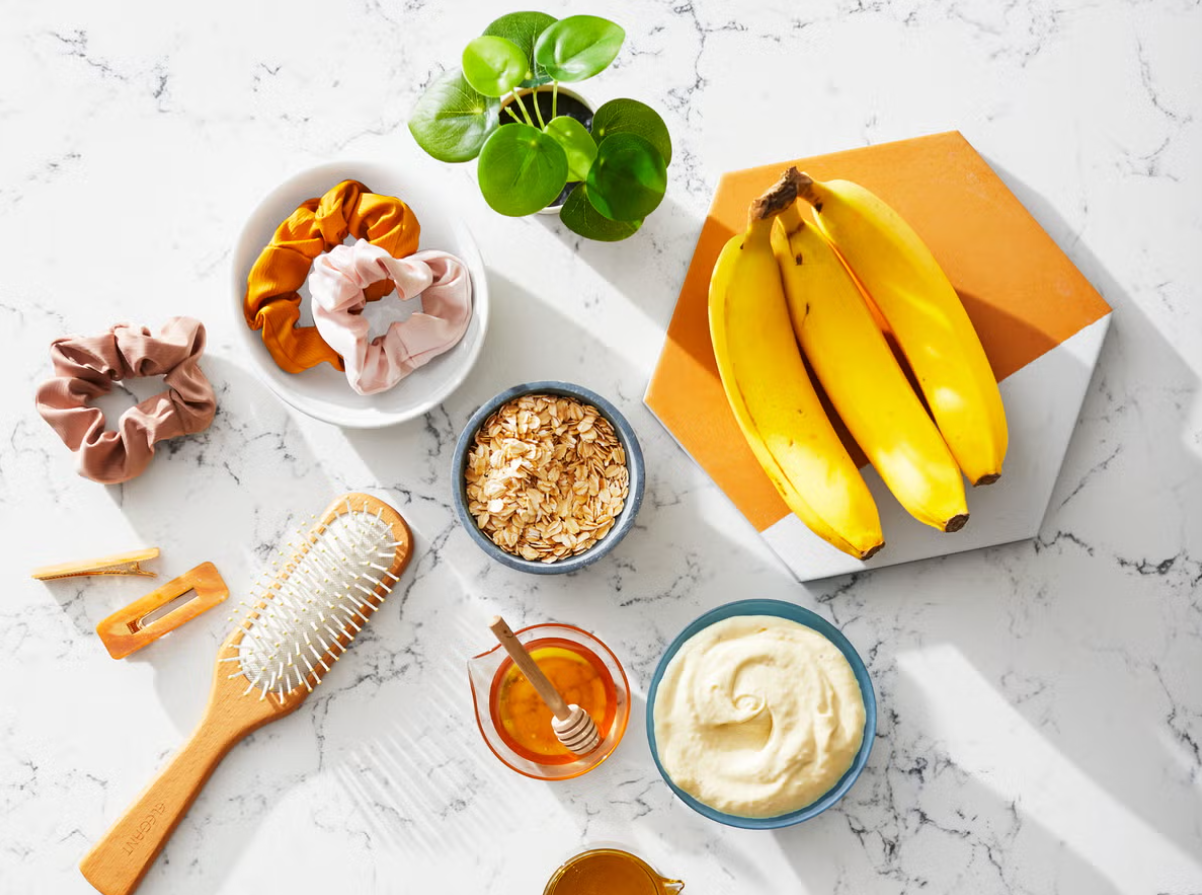
Banana can be used in homemade hair masks to provide a softening and conditioning effect.
Ingredients
- 1 ripe banana
- 1 tablespoon yogurt
- 1 teaspoon honey
How to Use
Blend the ingredients until completely smooth.
Apply the mixture to damp hair, focusing on the lengths and ends.
Leave it on for around 15–20 minutes and rinse very thoroughly.
Important Tip
Blending is important. Large banana pieces can become difficult to remove from the hair.
6. Olive Oil Hair Mask
Olive oil can provide rich conditioning for dry hair.
Ingredients
- 1–2 tablespoons olive oil
- 1 tablespoon aloe vera gel
How to Use
Mix the ingredients and apply them mainly to dry or rough sections.
Leave the treatment on for approximately 20 minutes.
Shampoo thoroughly afterward.
Best For
This mask may work well for thick or coarse hair.
If your hair is fine or becomes greasy easily, use a smaller amount.
7. Egg Hair Mask
Egg is sometimes used in homemade hair treatments because it contains protein.
Ingredients
- 1 egg
- 1 tablespoon plain yogurt
How to Use
Beat the egg and mix it with yogurt.
Apply the mixture to the lengths and ends.
Leave it on for around 15 minutes and rinse with cool or lukewarm water.
Avoid hot water because it can cause the egg to cook and become difficult to remove.
Best For
This treatment may be useful for hair that feels weak or damaged, although not every hair type responds well to protein-rich treatments.
Natural Hair Mask Comparison
Choosing the right mask depends on your hair texture and how dry it feels.
| Hair Type | Recommended Mask | How Often |
|---|---|---|
| Fine, dry hair | Aloe vera mask | Once weekly |
| Thick, dry hair | Coconut oil mask | Once weekly |
| Very dry hair | Avocado mask | Once weekly |
| Frizzy hair | Honey and yogurt mask | Once weekly |
| Coarse hair | Olive oil mask | Once weekly |
| Damaged-feeling hair | Egg-based mask | Occasionally |
These are general suggestions. Your hair may respond differently to each ingredient.
How to Use a Hair Mask Correctly
For better results, follow a few simple steps.
1. Start With Clean or Slightly Damp Hair
Many masks are easier to distribute through damp hair.
2. Focus on the Lengths
If your scalp is oily, avoid applying heavy masks directly to the scalp.
3. Don’t Use Too Much
More product does not automatically mean better results.
4. Give the Mask Time to Work
Most homemade masks only need a short application period.
5. Rinse Thoroughly
Food-based ingredients can leave residue if they are not rinsed properly.
6. Follow With Conditioner if Needed
If your hair still feels rough after rinsing, apply your regular conditioner.
How Often Should You Use Natural Hair Masks?
For most people, once a week is a reasonable starting point.
Very dry hair may benefit from regular conditioning, but using rich homemade masks too frequently can cause buildup or make the hair feel heavy.
If your hair becomes greasy, sticky, stiff, or weighed down, reduce the frequency.
Tips to Reduce Frizz Naturally
A hair mask alone cannot prevent all frizz. Your everyday habits also matter.
Try these simple tips:
- Avoid washing with very hot water.
- Use conditioner after shampooing.
- Avoid aggressive towel drying.
- Use a microfiber towel or soft T-shirt.
- Detangle gently.
- Reduce frequent heat styling.
- Use a heat protectant before styling.
- Avoid excessive brushing.
- Protect hair from extreme weather.
- Trim severely split ends.
If you have curly or wavy hair, brushing it excessively when dry can make frizz more noticeable.
Natural Hair Mask Mistakes to Avoid
Using Lemon Juice
Lemon juice can be irritating and may make hair feel dry. It is not necessary for a moisturizing hair mask.
Using Baking Soda
Baking soda is not a gentle moisturizing treatment and can leave hair feeling rough or dry.
Applying Too Much Oil
Heavy oiling can make hair greasy and difficult to wash.
Leaving Masks on Overnight
Longer application does not necessarily mean better results. Follow a reasonable application time.
Applying Heavy Masks to an Oily Scalp
If your scalp is oily, concentrate rich treatments on the dry lengths and ends.
Using Unblended Food Ingredients
Banana and avocado should be completely smooth to make rinsing easier.
Can Natural Hair Masks Repair Damaged Hair?
Natural hair masks can improve the feel and appearance of dry hair, but they cannot permanently repair severely damaged hair.
Hair that has split or broken cannot be restored to its original condition. Conditioning treatments can temporarily smooth the hair and make it easier to manage.
For severely damaged ends, trimming is often the most practical solution.
How to Make a Simple Weekly Hair Routine
A simple routine can include:
Wash Day:
Gentle shampoo → Conditioner → Leave-in conditioner
Once a Week:
Natural hair mask → Rinse → Conditioner if needed
Before Heat Styling:
Heat protectant → Styling
Daily:
Gentle detangling and minimal manipulation
Keeping your routine simple can help prevent additional damage.
FAQs About Natural Hair Masks for Dry and Frizzy Hair
1. What is the best natural hair mask for dry and frizzy hair?
Coconut oil, aloe vera, avocado, honey, and yogurt are popular choices. The best option depends on your hair texture and how much moisture it needs.
2. How often should I use a natural hair mask?
Start with once a week. If your hair becomes heavy or greasy, use the mask less frequently.
3. Is coconut oil good for frizzy hair?
Coconut oil can condition dry hair and may make it feel softer and smoother. Use a small amount, especially if your hair is fine.
4. Can aloe vera reduce hair frizz?
Aloe vera can provide lightweight moisture and may help hair feel smoother. Results vary depending on hair type and the cause of frizz.
5. Is honey good for dry hair?
Honey can be used in homemade conditioning masks and may help support moisture. Combine it with other suitable ingredients rather than applying a large amount directly to the hair.
6. Can I use a hair mask every day?
Daily use is usually unnecessary. Rich masks can cause buildup or make hair feel heavy when used too often.
7. Should I apply a hair mask to my scalp?
If you have an oily scalp, it is usually better to concentrate rich masks on the lengths and ends. Avoid applying ingredients that irritate your scalp.
8. Can homemade hair masks stop hair fall?
Hair masks can condition the hair and reduce dryness-related breakage, but they cannot treat every cause of hair loss. Persistent or sudden hair loss should be professionally evaluated.
9. How long should I leave a natural hair mask on?
Most homemade masks can be left on for around 15–30 minutes. Leaving them on for many hours does not necessarily provide additional benefits.
10. Can natural hair masks make hair softer?
Yes, conditioning ingredients can make hair feel softer and smoother temporarily. Consistent conditioning and gentle hair care can also help improve manageability.
Final Thoughts
The best natural hair masks for dry and frizzy hair are simple, gentle, and suited to your hair type. Coconut oil, aloe vera, avocado, honey, yogurt, and other conditioning ingredients can help improve the feel and appearance of dry hair.
However, a hair mask is only one part of healthy hair care. Use conditioner regularly, reduce excessive heat styling, avoid harsh treatments, and handle your hair gently.
Start with one mask once a week rather than trying several treatments at the same time. This makes it easier to see what works for your hair and helps prevent unnecessary buildup or irritation.