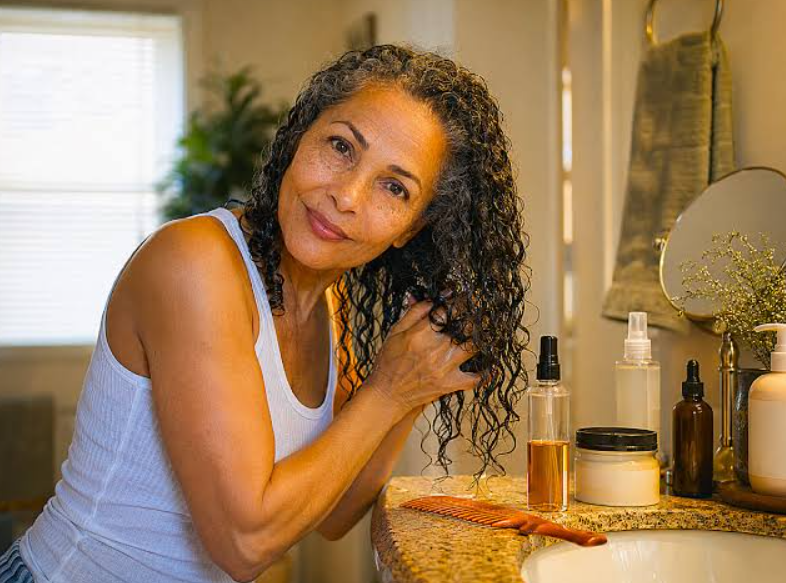
Curly hair can look beautiful, voluminous, and full of personality, but it often needs a little extra care to stay moisturized, defined, and manageable. Because curls can be more prone to dryness, frizz, tangling, and breakage, using the right products and techniques can make a significant difference.
The best hair care routine for curly hair focuses on moisture, gentle cleansing, careful detangling, curl definition, and protection from damage. You do not necessarily need a complicated routine or dozens of products. A simple and consistent approach can help your curls look healthier and more defined.
Why Does Curly Hair Get Dry and Frizzy?
Curly hair tends to have a different structure from straight hair. The natural oils produced by the scalp may not travel as easily down the bends and curves of the hair strand.
As a result, the lengths and ends can become dry.
Common causes of curly hair dryness and frizz include:
- Lack of moisture
- Frequent heat styling
- Harsh shampoos
- Excessive brushing
- Rough towel drying
- Chemical treatments
- Humidity
- Product buildup
- Overwashing
- Split ends
The first step in creating a curly hair routine is understanding that curls usually benefit from gentle handling and adequate conditioning.
Best Hair Care Routine for Curly Hair
A basic curly hair routine can include:
Cleanse → Condition → Detangle → Style → Dry → Protect
The exact products and frequency should be adjusted according to your curl pattern, scalp type, hair thickness, and level of dryness.
1. Choose a Gentle Shampoo
The foundation of a curly hair routine is a suitable shampoo.
Curly hair can feel dry when cleansed too aggressively, so choose a shampoo that cleans your scalp without leaving the lengths excessively stripped.
Focus shampoo primarily on the scalp rather than scrubbing the ends.
If your scalp is oily, you may need to wash more frequently. If your scalp and hair are dry, you may prefer longer intervals between washes.
Shampoo Tips
- Use lukewarm water.
- Massage the scalp gently.
- Avoid scratching with your fingernails.
- Rinse thoroughly.
- Don’t aggressively scrub the lengths.
2. Never Skip Conditioner
Conditioner is especially important for curly hair because it helps improve softness and manageability.
Apply conditioner mainly to the mid-lengths and ends.
Allow it to sit for a few minutes before rinsing.
If your curls are particularly dry, you may benefit from a richer conditioner or occasional deep-conditioning treatment.
3. Detangle Your Curls Carefully
One of the biggest mistakes people make with curly hair is brushing it aggressively.
Instead, detangle your hair when it is wet or damp and coated with conditioner.
Use:
- Your fingers
- A wide-tooth comb
- A curl-friendly detangling brush
Start at the ends and gradually work upward toward the roots.
This method can help reduce unnecessary pulling and breakage.
4. Use a Leave-In Conditioner
A leave-in conditioner can provide additional moisture after washing.
Apply a small amount to damp hair, concentrating on the lengths and ends.
A leave-in product can help:
- Reduce dryness
- Improve softness
- Make detangling easier
- Reduce frizz
- Prepare hair for styling
Fine curls may need only a small amount, while thick or coarse curls may benefit from a richer leave-in product.
5. Use a Curl Styling Product
After applying leave-in conditioner, use a styling product to help define your curls.
Popular options include:
- Curl cream
- Curl gel
- Styling mousse
- Lightweight curl lotion
Apply the product while the hair is still damp.
Instead of brushing the product through repeatedly, gently distribute it through the curls and encourage the natural curl pattern.
6. Try the Scrunching Technique
Scrunching is a simple technique that can help encourage curl definition.
Apply your styling product to damp hair.
Then gently gather sections of hair from the ends and squeeze them upward toward the scalp.
Repeat around the head.
Avoid aggressively squeezing or twisting the hair.
7. Don’t Rub Your Hair With a Regular Towel
Traditional towel drying can create friction and make curly hair look frizzier.
Instead, gently squeeze excess water from your hair.
You can use:
- A microfiber towel
- A soft cotton T-shirt
- A smooth, lightweight towel
Avoid aggressively rubbing the curls.
8. Let Your Hair Dry Gently
You can allow curly hair to air-dry or use a diffuser attachment with a blow dryer.
If using a diffuser:
- Use low or medium heat.
- Use low airflow when possible.
- Avoid constantly touching the curls.
- Dry until the hair is mostly or completely dry.
Excessive heat can increase dryness and damage.
9. Avoid Brushing Dry Curly Hair
Brushing curly hair when it is completely dry can separate the curl pattern and create significant frizz.
If you need to refresh your curls, try lightly misting the hair with water and applying a small amount of leave-in conditioner or curl product.
Then gently reshape the curls with your fingers.
Curly Hair Routine by Hair Type
Different curls may need different levels of moisture and styling.
| Curly Hair Type | Main Need | Helpful Products |
|---|---|---|
| Fine curls | Lightweight moisture | Light leave-in, mousse |
| Thick curls | Deep moisture | Rich conditioner, curl cream |
| Dry curls | Hydration | Leave-in, hair mask |
| Frizzy curls | Moisture and hold | Curl cream, gel |
| Oily scalp with dry curls | Balanced cleansing | Gentle shampoo, conditioner |
| Damaged curls | Conditioning and protection | Hair mask, leave-in conditioner |
These are general guidelines. Your individual hair may respond differently.
How Often Should You Wash Curly Hair?
There is no universal washing schedule for curly hair.
Some people may wash their hair several times a week, while others prefer once a week or less.
Consider washing when:
- Your scalp feels oily.
- You have significant product buildup.
- Your hair feels dirty.
- Your scalp becomes uncomfortable.
- You have excessive sweat or environmental buildup.
The goal is to keep the scalp clean without unnecessarily drying the hair.
Use a Deep Conditioning Mask
A deep-conditioning treatment can be useful when curls feel dry, rough, or difficult to manage.
Use a moisturizing hair mask approximately once a week or as needed.
Apply it mainly to the lengths and ends.
Avoid using extremely heavy treatments too frequently if your curls are fine or easily weighed down.
How to Refresh Curly Hair Between Washes
You do not necessarily need to completely wash your hair every day.
For a simple refresh:
- Lightly mist your curls with water.
- Apply a small amount of leave-in conditioner.
- Add a little curl cream or gel if needed.
- Scrunch the curls gently.
- Allow them to air-dry.
If the curls still look flat, reshape individual sections with your fingers.
Best Oils for Curly Hair
Hair oils can provide additional conditioning for dry curls.
| Oil | Best For |
|---|---|
| Coconut oil | Dry and coarse curls |
| Argan oil | Frizz and shine |
| Jojoba oil | Lightweight conditioning |
| Olive oil | Very dry hair |
| Almond oil | Softness and shine |
Use only a small amount.
Applying too much oil can weigh down curls and create buildup.
How to Sleep With Curly Hair
Your nighttime routine can have a major effect on how your curls look the next morning.
Try sleeping with your hair loosely gathered on top of your head in a style sometimes called a “pineapple.”
You can also use a satin or silk pillowcase to reduce friction.
Avoid tight hair ties that pull on the curls.
How to Protect Curly Hair From Heat
Heat styling can make curls dry and fragile over time.
If you use a straightener, curling tool, or blow dryer:
- Use a heat protectant.
- Keep the temperature moderate.
- Avoid repeatedly heating the same section.
- Give your curls regular breaks from heat.
- Use a diffuser when drying curly hair.
If you want to preserve your natural curl pattern, minimizing unnecessary heat can be helpful.
Common Curly Hair Mistakes
Washing Too Frequently
Excessive cleansing can leave curls dry.
Skipping Conditioner
Curly hair often benefits from regular conditioning.
Brushing Dry Hair
This can disrupt curl formation and increase frizz.
Using Too Much Product
Heavy layers of cream, oil, and gel can create buildup.
Rough Towel Drying
Aggressive rubbing can increase friction and frizz.
Applying Too Much Heat
Frequent high-temperature styling can weaken the hair.
Constantly Touching Your Curls
Touching curls while they are drying can disrupt definition and increase frizz.
How to Reduce Frizz Naturally
A few simple habits can make curly hair easier to manage:
- Keep your curls moisturized.
- Use conditioner regularly.
- Avoid aggressive brushing.
- Dry hair gently.
- Reduce excessive heat.
- Use a suitable styling product.
- Protect curls while sleeping.
- Avoid overusing heavy oils.
- Trim severely damaged ends.
Remember that some frizz is completely normal, especially in humid weather.
The goal does not have to be eliminating every flyaway.
Should You Trim Curly Hair?
Regular trimming can help remove split and damaged ends.
Trimming does not make hair grow faster, but it can make curls look healthier and prevent damaged ends from making the hair appear rough.
If you have long curls, a small trim can also make the shape look more defined.
Simple Weekly Curly Hair Schedule
Wash Day
Gentle shampoo → Conditioner → Detangle → Leave-in conditioner → Curl cream or gel → Air-dry or diffuse
Midweek
Refresh with water → Apply a small amount of leave-in → Scrunch curls
Once a Week
Use a deep-conditioning mask if your hair needs additional moisture.
Nightly
Loosely protect curls and reduce friction with a suitable pillowcase or hair covering.
FAQs About the Best Hair Care Routine for Curly Hair
1. What is the best hair care routine for curly hair?
A simple routine includes gentle cleansing, regular conditioning, careful detangling, leave-in conditioner, curl styling products, gentle drying, and nighttime protection.
2. How often should curly hair be washed?
It depends on your scalp and hair type. Wash when your scalp becomes oily or has significant buildup rather than following a fixed schedule.
3. Should I brush curly hair every day?
Daily brushing is usually unnecessary for curly hair. Detangle gently when the hair is damp and conditioned to reduce breakage and frizz.
4. How can I make my curls more defined?
Apply styling products to damp hair and use techniques such as scrunching. Avoid excessive brushing and touching while the curls are drying.
5. Is oil good for curly hair?
Yes, small amounts of suitable oils can help condition dry curls and reduce the feeling of roughness. Avoid using excessive amounts because they can weigh down the hair.
6. How can I reduce frizz in curly hair?
Keep the hair conditioned, minimize heat damage, avoid aggressive towel drying, detangle gently, and use a suitable curl cream or gel.
7. Should I use conditioner every time I wash curly hair?
Conditioner is generally helpful for curly hair because it improves softness and manageability. Apply it mainly to the lengths and ends.
8. Is air-drying better for curly hair?
Air-drying can reduce heat exposure, but it is not the only option. A diffuser used with moderate heat and airflow can also be suitable.
9. Can I sleep with wet curly hair?
Sleeping with very wet hair can increase tangling and friction. When possible, allow your hair to dry before sleeping or use a gentle protective style.
10. How can I keep curly hair moisturized?
Use a suitable conditioner, leave-in conditioner, occasional deep-conditioning mask, and small amounts of hair oil if needed. Avoid excessive heat and harsh cleansing.
Final Thoughts
The best hair care routine for curly hair does not have to be complicated. Focus on keeping your curls conditioned, handling them gently, and avoiding unnecessary damage.
Use a gentle shampoo, never skip conditioner, detangle carefully, apply styling products to damp hair, and avoid rough towel drying. Protect your curls while sleeping and minimize excessive heat styling.
Most importantly, learn what your own curls need. Fine curls may need lightweight products, while thick and coarse curls may benefit from richer conditioning. With consistency and gentle care, you can keep your curls softer, more defined, manageable, and healthier-looking.