Healthy, shiny, and manageable hair often starts with a good hair-care routine. While no single oil can solve every hair problem, some natural oils can help improve the feel and appearance of hair, reduce dryness, and protect strands from certain types of damage.
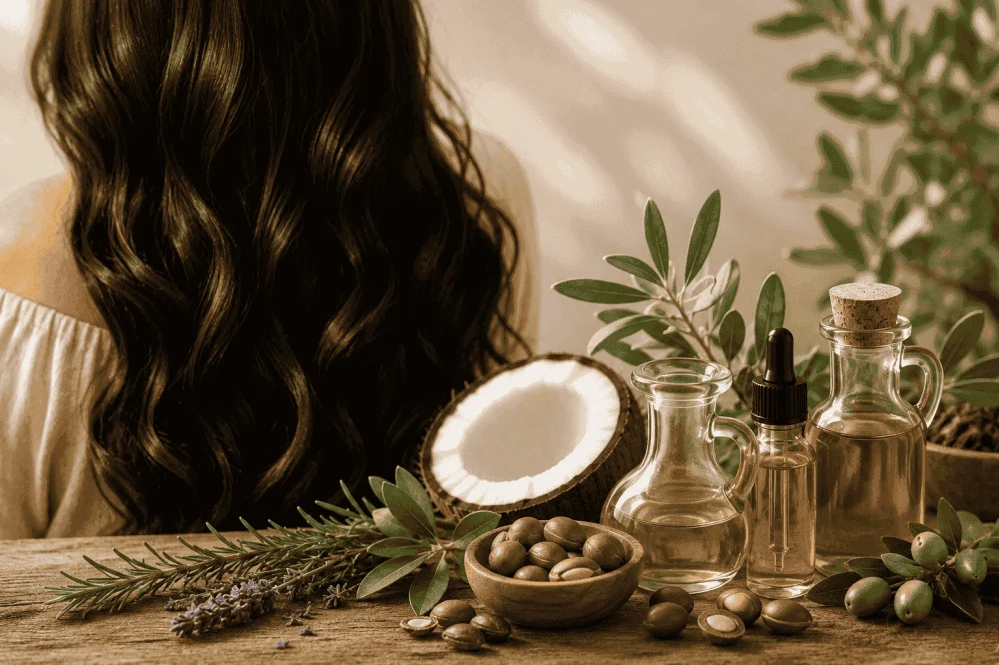
The best natural oils for healthy hair depend on your hair type, scalp condition, and what you want to achieve. Coconut oil, rosemary oil, argan oil, jojoba oil, olive oil, and castor oil are among the most popular options.
However, it is important to understand the difference between improving hair condition and treating hair loss. Some oils may help protect or condition the hair shaft, while evidence for actual hair growth is much more limited.
1. Coconut Oil
Coconut oil is one of the most researched natural oils for hair care. It can help reduce protein loss from hair and may provide protection against certain types of hair damage. Research has found that coconut oil can penetrate the hair shaft more effectively than some other oils.
This makes coconut oil particularly useful for dry, damaged, or chemically treated hair.
You can apply a small amount to the lengths and ends of your hair before washing. Leave it on for a limited period and then wash thoroughly with shampoo.
Best for: Dry, damaged, coarse, or frizzy hair.
2. Rosemary Oil
Rosemary oil has become increasingly popular among people interested in natural approaches to hair care. There is some clinical evidence suggesting that rosemary oil may support hair growth in people with androgenetic alopecia.
In one randomized study, rosemary oil and 2% minoxidil both showed increased hair counts after six months, with no significant difference between the two groups at that point. However, this was a relatively small study, so more research is needed before considering rosemary oil equivalent to established medical treatments.
If you use rosemary essential oil, it should be diluted in a suitable carrier oil rather than applied directly to the scalp.
Best for: People interested in scalp care and supporting hair-growth routines.
3. Argan Oil
Argan oil is often called “liquid gold” because of its smooth texture and moisturizing properties. It contains fatty acids and vitamin E and is commonly used to improve the appearance and manageability of dry hair.
Argan oil is particularly useful as a finishing oil. Applying a few drops to the mid-lengths and ends can help hair look smoother and shinier without requiring a large amount.
Because it is relatively lightweight, it may work well for people who dislike the heavy feeling of traditional hair oils.
Best for: Frizz, dryness, shine, and styling.
4. Jojoba Oil
Jojoba oil is technically a liquid wax rather than a conventional vegetable oil. It has a texture that can work well in hair and scalp-care products.
It can help condition dry-feeling hair and may be useful for people who want a lighter oil. Because everyone’s scalp reacts differently to oils, start with a small amount and see how your skin responds.
Jojoba oil can also be mixed with another carrier oil when creating a simple pre-shampoo treatment.
Best for: Dry hair, scalp conditioning, and lightweight moisture.
5. Olive Oil
Olive oil is widely available and has long been used in traditional hair-care routines. Its rich texture can help coat and soften dry hair, making it particularly useful for thick or coarse strands.
A small amount can be applied to the lengths and ends before shampooing. However, olive oil can feel heavy on fine hair, so people with thin or oily hair may prefer a lighter option.
Best for: Thick, coarse, dry, and textured hair.
6. Castor Oil
Castor oil is a thick vegetable oil that is frequently included in homemade hair treatments. It can help give hair a coated, moisturized feel and may make dry strands appear shinier.
Despite its popularity, claims that castor oil dramatically increases hair growth are not well established by high-quality clinical evidence. It is better viewed as a conditioning oil rather than a proven hair-growth treatment.
Because castor oil is very thick, mixing a small amount with a lighter carrier oil can make application easier.
Best for: Dry hair and people who prefer rich oil treatments.
7. Sweet Almond Oil
Sweet almond oil is another lightweight-to-medium oil that can help condition dry hair and improve its softness.
It can be applied to the ends of the hair after washing or used as a pre-shampoo treatment. People with nut allergies should be cautious with almond-derived products and should discuss their suitability with a healthcare professional if necessary.
Best for: Dryness, softness, and shine.
8. Avocado Oil
Avocado oil contains fatty acids and is popular in hair masks and conditioning treatments. Its relatively rich texture can make it suitable for dry or coarse hair.
If your hair is easily weighed down, use only a small amount or apply it mainly to the ends.
Best for: Dry, coarse, and textured hair.
How to Choose the Best Hair Oil
There is no universal “best” oil for everyone. Your choice should depend on your hair’s condition.
For Dry Hair
Coconut, olive, avocado, and argan oils can be good options. Richer oils may be particularly useful for coarse or very dry hair.
For Fine Hair
Choose lighter oils such as jojoba or argan oil and use only a few drops. Heavy oils can make fine hair look greasy or flat.
For Frizzy Hair
Argan and coconut oil may help improve the appearance and manageability of frizzy hair. Apply a small amount mainly to the mid-lengths and ends.
For Damaged Hair
Coconut oil has some of the strongest evidence among commonly used natural oils for reducing protein loss and helping protect the hair shaft.
For Hair Growth
Rosemary oil has some promising clinical evidence, but natural oils should not be treated as guaranteed hair-loss cures. Persistent or sudden hair loss can have many causes and may require professional evaluation.
How to Apply Hair Oil Correctly
Using too much oil does not necessarily provide better results. Start with a small amount and increase it only if necessary.
For a pre-shampoo treatment, apply a modest amount to the hair, concentrating on dry lengths and ends if your scalp becomes oily easily. Leave it on for a reasonable period and then wash your hair.
For finishing, rub one or two drops between your palms and gently smooth them over the ends and areas affected by frizz.
If using essential oils such as rosemary, always dilute them in a carrier oil and avoid getting concentrated essential oil into your eyes.
How Often Should You Oil Your Hair?
There is no fixed schedule that works for everyone. People with very dry or coarse hair may enjoy oil treatments once or twice a week, while those with fine or oily hair may prefer occasional use.
Pay attention to how your scalp and hair respond. If your hair becomes greasy, heavy, itchy, or difficult to clean, reduce the amount or frequency.
Remember that healthy hair also depends on gentle washing, conditioning, adequate nutrition, and avoiding excessive heat and chemical damage.
Can Natural Oils Stop Hair Loss?
Natural oils should not be considered a guaranteed treatment for hair loss.
Rosemary oil has shown promising results in one randomized trial involving androgenetic alopecia, but the evidence base remains much smaller than that for established medical treatments.
If you notice sudden hair loss, bald patches, significant thinning, scalp inflammation, or persistent shedding, it is better to consult a dermatologist rather than relying exclusively on oils.
Possible Problems With Hair Oils
Natural does not automatically mean risk-free. Oils can cause irritation or allergic reactions in some people. Essential oils are particularly concentrated and should generally be diluted before topical use.
Heavy hair products containing oils can also contribute to breakouts around the hairline and forehead in some people. The American Academy of Dermatology notes that oils from hair products can clog pores and contribute to acne in susceptible individuals.
Before using a new oil extensively, consider testing a small amount on a limited area and stop if you develop irritation.
Other Tips for Healthy Hair
Oil is only one part of a healthy hair routine. Avoid excessive heat styling, handle wet hair gently, and minimize aggressive brushing. Dermatologists also recommend reducing practices that can contribute to breakage and hair damage.
Use conditioner regularly, protect your hair from excessive heat, and choose products appropriate for your hair type.
A balanced diet is also important because hair growth depends on adequate nutrition.
FAQs About Natural Oils for Healthy Hair
Which natural oil is best for healthy hair?
Coconut oil is one of the better-studied options for protecting the hair shaft and reducing protein loss. Argan, jojoba, and olive oils can also be useful for conditioning and improving the appearance of dry hair.
Which oil is best for hair growth?
Rosemary oil has some clinical evidence supporting its potential role in hair growth, but the evidence is limited compared with established medical treatments. It should not be considered a guaranteed solution for hair loss.
Can I apply coconut oil to my hair every day?
You can use coconut oil regularly if your hair tolerates it, but daily application may be too heavy for some people. Start with occasional use and adjust according to your hair type.
Is rosemary oil safe for hair?
Diluted rosemary oil may be suitable for many people, but concentrated essential oils can irritate the skin. Always dilute rosemary essential oil before applying it to the scalp and stop using it if irritation occurs.
Does castor oil make hair grow faster?
There is not strong clinical evidence proving that castor oil significantly accelerates hair growth. It can condition the hair, but claims about dramatic growth should be treated cautiously.
Which oil is best for dry and frizzy hair?
Coconut, argan, olive, and avocado oils can be useful for dry or frizzy hair. The best choice depends on whether your hair is fine, thick, straight, wavy, or curly.
Can oil repair damaged hair?
Oil cannot permanently repair severely damaged hair because the hair shaft is not living tissue. However, some oils can coat and condition the hair and may reduce certain types of damage. Coconut oil has evidence for reducing protein loss from hair.
How long should I leave oil in my hair?
There is no need to leave most oils on your hair overnight. A pre-shampoo treatment for a limited period can be sufficient. If your scalp becomes irritated or your hair feels excessively greasy, reduce the amount or duration.
Final Thoughts
The best natural oils for healthy hair are not necessarily the most expensive or popular ones. Coconut oil stands out for its evidence regarding hair-shaft protection, while argan and jojoba oils can be useful for conditioning and shine. Rosemary oil is particularly interesting because preliminary clinical research suggests it may have a role in hair-growth routines.
However, healthy hair requires more than oil. Gentle hair care, regular conditioning, adequate nutrition, and protection from excessive heat and chemical damage are all important.
Choose an oil based on your hair type, start with a small amount, and pay attention to how your hair and scalp respond. If you are experiencing significant hair loss or scalp problems, seek professional advice rather than relying solely on natural oils.