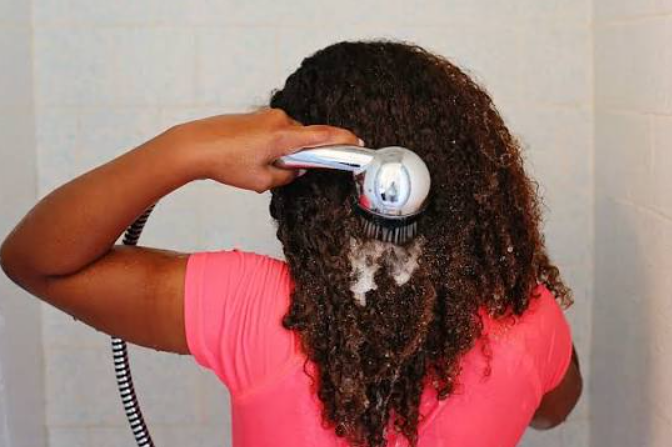
Finding the best products for low porosity hair can be challenging because this hair type often behaves differently from high porosity hair. Low porosity hair tends to resist absorbing moisture, can take longer to become fully wet, and may become weighed down by heavy oils, creams, and butters.
The good news is that low porosity hair does not necessarily need a complicated routine. Lightweight products, proper application techniques, gentle cleansing, and occasional clarifying can help keep the hair moisturized without creating excessive buildup.
Whether your hair is straight, wavy, curly, or coily, understanding how it responds to products is more important than following a strict product list.
What Is Low Porosity Hair?
Hair porosity refers to how easily hair absorbs and retains moisture.
Low porosity hair generally has a tightly packed outer layer, which can make it more difficult for water and moisturizing products to penetrate the hair.
Common signs may include:
- Hair takes a long time to become completely wet.
- Products seem to sit on top of the hair.
- Heavy creams make hair feel greasy or coated.
- Hair takes a long time to dry.
- There is frequent product buildup.
- Lightweight products tend to work better.
- Hair can feel dry even when products are applied regularly.
These signs do not automatically prove that your hair is low porosity. Hair behavior can also be affected by product buildup, weather, styling habits, and hair texture.
Best Products for Low Porosity Hair
The ideal routine usually focuses on lightweight moisture and avoiding excessive buildup.
| Product Type | What to Look For | Why It Helps |
|---|---|---|
| Shampoo | Gentle or balancing formula | Cleans buildup without excessive dryness |
| Conditioner | Lightweight and moisturizing | Adds moisture without heaviness |
| Leave-in conditioner | Lightweight, water-based formula | Provides manageable moisture |
| Curl cream | Light texture | Defines curls without weighing them down |
| Hair gel | Lightweight hold | Helps control frizz and define texture |
| Hair oil | Lightweight oil | Adds softness and shine |
| Hair mask | Lightweight moisturizing formula | Provides occasional extra conditioning |
| Clarifying shampoo | Occasional deep cleansing | Helps remove product buildup |
1. Lightweight Shampoo
A suitable shampoo is the foundation of a low porosity hair routine.
Because low porosity hair can be prone to buildup, choose a shampoo that cleans the scalp effectively without leaving the hair excessively dry.
Look for words such as:
- Gentle
- Balancing
- Lightweight
- Moisturizing
- Clarifying, for occasional use
Apply shampoo primarily to the scalp and allow the lather to rinse through the lengths.
Avoid using extremely harsh cleansers too frequently, especially if your hair is already dry.
2. Lightweight Conditioner
Conditioner is important for low porosity hair, but a very rich formula may leave it feeling heavy.
Choose a lightweight conditioner and apply it mainly to the lengths and ends.
Ingredients such as aloe vera, glycerin, panthenol, and other lightweight conditioning ingredients can be useful.
Allow the conditioner to sit for a few minutes before rinsing.
3. Water-Based Leave-In Conditioner
A lightweight leave-in conditioner can help keep low porosity hair soft without creating excessive buildup.
Look for a leave-in with a relatively light texture rather than a thick butter-based formula.
Apply a small amount to damp hair.
If your hair becomes greasy or coated quickly, reduce the amount.
4. Lightweight Curl Cream
If you have wavy or curly low porosity hair, you may want a styling cream to improve definition.
Choose a lightweight curl cream rather than a very thick butter or heavy styling product.
Apply it to damp hair and distribute it evenly.
A small amount is often enough.
5. Lightweight Hair Gel
Gel can be useful for controlling frizz and improving curl definition.
For low porosity curly or wavy hair, a lightweight gel can provide hold without the heavy feeling that some creams and butters create.
Apply gel to damp hair after your leave-in or curl cream.
Scrunch the hair gently to encourage your natural texture.
6. Lightweight Hair Oils
Low porosity hair often responds better to lighter oils.
Popular options include:
- Jojoba oil
- Argan oil
- Grapeseed oil
- Sweet almond oil
Use only a few drops, particularly if your hair is fine.
Apply oil mainly to the lengths and ends rather than repeatedly coating the entire head.
7. Aloe Vera-Based Products
Aloe vera is often included in lightweight hair products because it has a light texture and can provide moisture without the heaviness of thick butters.
Aloe-based leave-in conditioners or styling products may work well for low porosity hair.
If you use pure aloe vera, choose a suitable product and patch test it if you have sensitive skin.
8. Clarifying Shampoo
Product buildup can be a common frustration with low porosity hair.
When conditioner, oils, styling products, and leave-ins accumulate, hair may feel:
- Greasy
- Dull
- Heavy
- Coated
- Difficult to moisturize
An occasional clarifying shampoo can help remove buildup.
However, clarifying shampoo should not necessarily be used every wash because excessive cleansing can leave the hair dry.
Use it according to your hair’s needs and the product instructions.
9. Lightweight Hair Masks
Low porosity hair can benefit from occasional deep conditioning, but extremely rich masks may cause buildup.
Choose a lightweight moisturizing mask.
Apply it mainly to the lengths and ends.
Using gentle warmth during conditioning can sometimes make the treatment feel more effective and easier to distribute.
Avoid excessive heat that could damage the hair.
Best Ingredients for Low Porosity Hair
Certain lightweight ingredients can work particularly well in a low porosity routine.
| Ingredient | Common Benefit |
|---|---|
| Aloe vera | Lightweight moisture |
| Glycerin | Moisture support |
| Panthenol | Conditioning |
| Jojoba oil | Lightweight softness |
| Argan oil | Shine and smoothness |
| Grapeseed oil | Lightweight conditioning |
| Honey | Moisture support |
| Hydrolyzed proteins | Can provide temporary strengthening and conditioning |
Not every ingredient works for every person. Your hair’s response should guide your choices.
Should You Avoid Heavy Butters?
You do not necessarily need to completely avoid ingredients such as shea butter or cocoa butter.
However, low porosity hair can become weighed down more easily by rich formulas.
If a product containing heavy butters makes your hair:
- Greasy
- Flat
- Sticky
- Coated
- Difficult to style
try using a smaller amount or switching to a lighter product.
Protein and Low Porosity Hair
Protein products can be useful for some hair types, particularly when hair feels weak or damaged.
However, too much protein can make some hair feel stiff or rough.
If your hair becomes dry, brittle, or unusually stiff after frequent protein treatments, reduce their use and focus on moisturizing products.
The goal is balance rather than avoiding or constantly using protein.
How to Moisturize Low Porosity Hair
The way you apply a product can be just as important as the product itself.
Try applying your conditioner and leave-in to damp or wet hair.
Water helps distribute the product more evenly.
You can also gently squeeze and smooth the product through the hair rather than applying large amounts to dry strands.
For curly hair, applying products while the hair is wet can help encourage better curl definition.
Best Product Routine for Low Porosity Hair
A simple routine could look like this:
Gentle shampoo → Lightweight conditioner → Leave-in conditioner → Lightweight styling product
For curly or wavy hair:
Shampoo → Conditioner → Leave-in → Curl cream or gel → Air-dry or diffuse
Use clarifying shampoo occasionally when buildup becomes noticeable.
How Often Should You Wash Low Porosity Hair?
There is no universal washing schedule.
Your scalp determines how frequently you need to cleanse.
If your scalp becomes oily quickly, you may need to wash more frequently.
If your scalp and hair are dry, you may prefer longer intervals.
Pay attention to buildup rather than following a strict calendar.
Common Mistakes With Low Porosity Hair
Using Too Much Product
Applying more product does not necessarily create more moisture.
Start with a small amount and add more only when needed.
Layering Too Many Products
Using leave-in conditioner, cream, butter, oil, and gel together can quickly create buildup.
Keep your routine simple.
Avoiding Shampoo Because Hair Is Dry
Low porosity hair can still accumulate product and oil. Regular cleansing is important.
Using Heavy Oils Frequently
Rich oils can weigh down fine or low porosity hair.
Overusing Protein
Too much protein can make some hair feel stiff or rough.
Never Clarifying
If your hair constantly feels coated despite using moisturizing products, buildup may be the issue.
Low Porosity Hair Routine for Different Hair Types
| Hair Type | Recommended Approach |
|---|---|
| Fine straight hair | Lightweight shampoo, conditioner, and serum |
| Wavy hair | Lightweight leave-in and mousse or gel |
| Curly hair | Leave-in, curl cream, lightweight gel |
| Coily hair | Moisturizing conditioner and lightweight leave-in |
| Oily scalp | Regular cleansing and minimal scalp products |
| Dry ends | Lightweight conditioner and small amount of oil |
How to Tell if Your Products Are Too Heavy
Your products may be too heavy if your hair becomes:
- Flat
- Greasy
- Sticky
- Difficult to style
- Coated
- Dull
- Less bouncy than usual
If this happens, simplify your routine.
Try using less leave-in conditioner and replacing rich creams with lightweight products.
FAQs About the Best Products for Low Porosity Hair
1. What are the best products for low porosity hair?
Lightweight shampoos, conditioners, leave-ins, curl creams, gels, and oils generally work well. Aloe vera, glycerin, panthenol, jojoba oil, and argan oil are examples of ingredients commonly used in lightweight formulas.
2. Is oil good for low porosity hair?
Yes, but use a small amount. Lightweight oils such as jojoba, argan, and grapeseed oil may be easier for low porosity hair to handle than very heavy oils.
3. Is coconut oil good for low porosity hair?
Coconut oil can work for some people, but it may feel heavy or cause buildup for others. If your hair feels stiff, greasy, or coated after using it, try a lighter oil.
4. How often should I clarify low porosity hair?
Clarify when you notice significant product buildup rather than following a strict schedule. Avoid over-clarifying because it can make hair feel dry.
5. Is low porosity hair always dry?
No. Low porosity hair can be oily, dry, or somewhere in between. Its defining characteristic is how it absorbs and retains moisture, not simply whether it feels dry.
6. What is the best moisturizer for low porosity hair?
A lightweight, water-based leave-in conditioner can be a good starting point. Choose a formula that moisturizes without leaving a heavy coating.
7. Should low porosity hair use protein?
Some low porosity hair can benefit from occasional protein-containing products, especially when damaged. However, excessive protein may make some hair feel stiff or rough.
8. Can low porosity hair use shea butter?
Yes, but use it cautiously. Rich butters can weigh down low porosity hair, especially if the hair is fine.
9. Why does my low porosity hair feel dry after using products?
Product buildup can sometimes prevent hair from feeling properly moisturized. Using too many layers or heavy products can also make hair feel coated rather than hydrated.
10. How can I make low porosity hair absorb moisture better?
Apply products to damp or wet hair, use lightweight formulas, avoid excessive product layering, and clarify occasionally when buildup occurs.
Final Thoughts
Choosing the best products for low porosity hair is mainly about finding the right balance between moisture and buildup control. Lightweight shampoos, conditioners, leave-ins, styling products, and oils can help keep the hair soft without making it feel heavy.
Avoid automatically choosing the richest products simply because your hair feels dry. Low porosity hair often benefits from smaller amounts of lightweight products applied to damp hair.
Keep your routine simple, clarify when necessary, and pay attention to how your hair responds. With the right combination of cleansing, moisture, and styling, low porosity hair can look soft, shiny, defined, and healthy.