Choosing the right foundation shade can make a huge difference in how natural and polished your makeup looks. The perfect foundation should blend seamlessly with your complexion without looking too light, too dark, too pink, too yellow, or noticeably different from your neck.
However, finding the right shade can be confusing because foundation shades are usually described using both skin tone and undertone. Lighting, seasonal changes, tanning, and different foundation formulas can also affect how a shade looks.
If you want to learn how to choose the right foundation shade, this guide will help you understand your skin tone, identify your undertone, test foundation correctly, and avoid common shade-matching mistakes.
What Is Skin Tone?
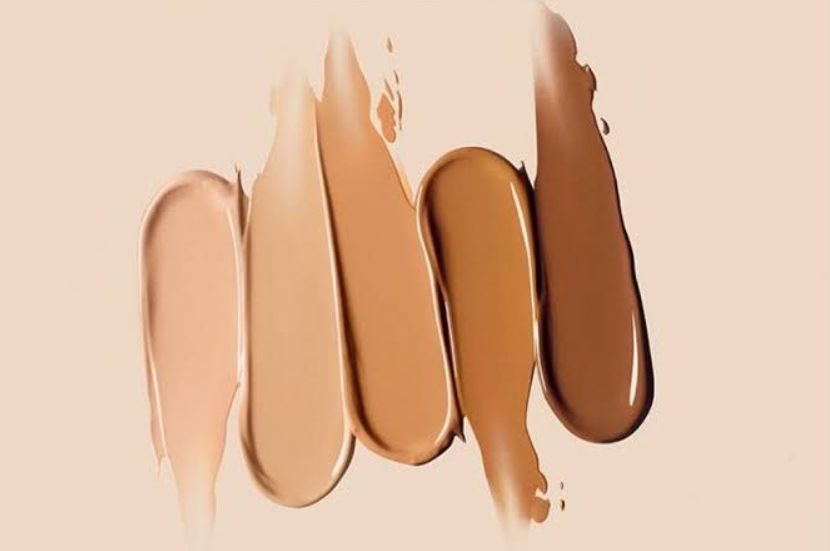
Your skin tone refers to how light or deep your complexion appears on the surface.
Common categories include:
- Fair
- Light
- Medium
- Tan
- Deep
- Dark
Your skin tone can change slightly throughout the year because of sun exposure and other factors.
However, your undertone is different.
What Is a Skin Undertone?
Your undertone is the subtle color underneath the surface of your skin.
The most common undertones are:
| Undertone | Common Appearance | Foundation Direction |
|---|---|---|
| Warm | Golden, yellow, peachy | Warm or golden shades |
| Cool | Pink, red, bluish | Cool or rosy shades |
| Neutral | Mix of warm and cool | Neutral shades |
| Olive | Greenish or muted golden | Olive or neutral-olive shades |
Knowing your undertone can make foundation shopping much easier.
How to Identify Your Skin Undertone
There are several ways to get an idea of your undertone.
No single test is perfect, so consider several signs together.
1. Look at Your Veins
Look at the veins on the inside of your wrist in natural light.
If they appear mostly:
- Green → You may have a warm undertone.
- Blue or purple → You may have a cool undertone.
- A mixture → You may have a neutral undertone.
However, vein color can be difficult to interpret, so do not rely on this test alone.
2. Think About How Your Skin Reacts to the Sun
Your reaction to sunlight can provide another clue.
If your skin tends to tan relatively easily, you may have a warm or olive undertone, although this is not a reliable test by itself.
If your skin tends to burn or turn pink quickly, you may lean toward a cool undertone.
Many people do not fit neatly into one category, so use this information together with other observations.
3. Consider Jewelry
Think about which jewelry colors tend to complement your complexion.
If gold jewelry appears especially flattering, you may lean warm.
If silver jewelry looks particularly harmonious, you may lean cool.
If both look equally suitable, you may have a neutral undertone.
This is only a general guideline rather than a scientific test.
4. Look at Your Natural Skin in Daylight
One of the most useful methods is simply observing your complexion in natural daylight.
Stand near a window or outside in indirect natural light and look at your face and neck.
Avoid judging your skin tone under strongly colored indoor lighting because it can change how colors appear.
Why Your Neck Matters When Choosing Foundation
Many people test foundation only on their hand or wrist.
This can lead to a poor match because the skin on your hands may be a different color from your face.
For a more natural-looking result, compare foundation with the area where you want the foundation to blend.
The jawline is often a useful testing area because it helps you see how the shade transitions between your face and neck.
How to Test Foundation Shades Correctly
If possible, test several shades rather than choosing the first one that looks close.
Apply a small amount of each shade in separate lines along your jawline.
Then observe them in natural-looking light.
The shade that seems to disappear most naturally into your skin is generally the closest match.
Do not judge the shade only immediately after application. Some foundations can change appearance as they settle.
What Is Foundation Oxidation?
Some foundations can appear slightly different after they have been exposed to air and mixed with natural oils on the skin.
This change is sometimes described as oxidation.
A foundation may appear:
- Slightly darker
- Warmer
- More orange
- Different from its initial appearance
Because of this, give the foundation some time to settle before making a final decision when testing in person.
Foundation Shade Matching Table
| If Your Skin Looks… | You May Need… |
|---|---|
| Very light with pink tones | Fair cool or neutral shade |
| Light with golden tones | Light warm shade |
| Light-to-medium and balanced | Neutral light-medium shade |
| Medium with golden tones | Medium warm shade |
| Medium with olive tones | Medium olive shade |
| Tan with warm tones | Tan warm or golden shade |
| Deep with neutral tones | Deep neutral shade |
| Deep with golden tones | Deep warm or golden shade |
These are general guidelines. Your exact shade depends on your individual complexion and the foundation’s shade range.
How to Choose Foundation for Warm Undertones
Warm undertones often have golden, yellow, or peachy qualities.
Look for foundation descriptions such as:
- Warm
- Golden
- Yellow
- Honey
- Warm beige
- Golden beige
Avoid automatically choosing a very yellow foundation simply because you think you are warm.
The shade should still blend naturally with your complexion.
How to Choose Foundation for Cool Undertones
Cool undertones often have pink, rosy, or bluish qualities.
Look for descriptions such as:
- Cool
- Rose
- Rosy
- Pink
- Cool beige
A foundation that is too yellow or orange may look noticeably different from your natural complexion.
How to Choose Foundation for Neutral Undertones
Neutral undertones sit between warm and cool.
If you find that both golden and pink foundations look slightly wrong, you may have a neutral undertone.
Look for shades labeled:
- Neutral
- Natural
- Beige
- Neutral beige
A neutral foundation can provide a more balanced appearance.
How to Choose Foundation for Olive Undertones
Olive undertones can be particularly difficult to match because they may have a muted green, golden, or slightly gray quality.
People with olive undertones sometimes find that standard warm foundations appear too orange, while cool shades can appear too pink.
Look for foundation ranges that specifically offer olive or neutral-olive shades when available.
How to Choose the Right Foundation for Your Skin Type
Shade is not the only factor.
The formula should also suit your skin type.
| Skin Type | Foundation Finish to Consider |
|---|---|
| Oily | Soft matte or natural |
| Dry | Hydrating or satin |
| Combination | Natural or balanced |
| Normal | Natural, satin, or matte |
| Sensitive | Comfortable formula your skin tolerates |
A perfect shade will not necessarily look good if the formula is unsuitable for your skin.
Foundation Shade for Oily Skin
If your skin becomes shiny throughout the day, consider a lightweight foundation with a natural or soft-matte finish.
Avoid automatically choosing the most matte formula available.
If your skin also has dry areas, an extremely matte formula may emphasize texture.
Foundation Shade for Dry Skin
If your skin is dry, a hydrating or satin-finish foundation may provide a more comfortable appearance.
Apply moisturizer before makeup and avoid excessive powder.
A foundation that matches your skin tone but clings to dry patches may still look uneven.
Foundation Shade for Combination Skin
Combination skin can be oily in some areas and dry in others.
Choose a foundation that provides a balanced finish.
You can also use different application techniques in different areas rather than applying a heavy layer everywhere.
Foundation Shade for Sensitive Skin
If your skin is sensitive, focus on finding a comfortable formula in addition to a suitable shade.
If you already know certain ingredients irritate your skin, check the ingredient list before purchasing.
Introduce new makeup carefully rather than changing several products at once.
Why Your Hand Is Not the Best Place to Test Foundation
Testing foundation on your hand is convenient, but it may not give you an accurate shade match.
Your hands can have a different:
- Color
- Undertone
- Level of sun exposure
- Texture
The jawline is generally more useful for checking how a foundation blends with your face and neck.
How to Choose Foundation Online
Buying foundation online can be more difficult because you cannot physically test the shade.
Before purchasing, check:
- Brand shade descriptions
- Undertone labels
- Shade comparison tools
- Customer swatches where available
- Your existing foundation shade
- Return or exchange policies
If you already own a foundation that matches you well, compare its shade information with the new product.
Keep in mind that shade names are not standardized between brands.
A “medium neutral” shade from one brand may look different from a “medium neutral” shade from another.
Common Foundation Shade Mistakes
Choosing a Shade Too Light
A foundation that is significantly lighter than your complexion can make the face look pale or gray.
Choosing a Shade Too Dark
A darker shade can create an obvious line around the jaw and neck.
Choosing the Wrong Undertone
Even if the depth is correct, the foundation can look unnatural if the undertone is wrong.
Testing Under Artificial Lighting
Indoor lighting can change how colors appear.
Natural daylight is generally more useful for checking a shade.
Not Waiting for the Foundation to Settle
Some formulas may change slightly after application.
Give the product some time before making your final decision.
Matching Only Your Face
Your face and neck can naturally have slightly different colors.
Look for a shade that creates a seamless transition rather than focusing on one small area.
What to Do If Your Foundation Shade Is Slightly Wrong
You do not necessarily have to throw away a foundation that is only slightly off.
If the shade is close, you may be able to adjust it with:
- A compatible foundation mixer
- A slightly lighter or darker foundation
- Strategic concealer
- Bronzer
- Powder
However, avoid mixing random products together without checking whether the formulas work well together.
If the undertone is significantly wrong, adjusting the shade may be more difficult.
How Many Foundation Shades Should You Test?
If shopping in person, try at least two or three shades that appear close to your complexion.
Apply them next to each other along the jawline.
Compare them after they settle.
The goal is not to find the foundation that looks most noticeable.
Instead, look for the shade that seems to disappear into your skin.
Simple Foundation Shade-Matching Process
Follow these steps:
Step 1: Identify your approximate skin tone.
Step 2: Determine whether your undertone is warm, cool, neutral, or olive.
Step 3: Choose several shades that appear close.
Step 4: Test them along your jawline.
Step 5: Check the shades in natural-looking light.
Step 6: Allow the foundation to settle.
Step 7: Choose the shade that blends most naturally.
Step 8: Check the transition between your face and neck.
This process can help reduce the chance of choosing a foundation that looks noticeably different after application.
FAQs About How to Choose the Right Foundation Shade
1. How do I know which foundation shade is right for me?
Identify your skin tone and undertone, then test several close shades along your jawline. The shade that blends most naturally with your complexion is usually the closest match.
2. Should foundation match my face or neck?
Aim for a seamless transition between your face and neck. Testing along the jawline can help you see whether the foundation blends naturally across both areas.
3. How do I find my foundation undertone?
Look at your complexion in natural light and consider your overall skin appearance, jewelry preferences, and how different foundation undertones look against your skin. Warm, cool, neutral, and olive are common categories.
4. Should foundation be lighter or darker than my skin?
For the most natural appearance, choose a foundation that closely matches your complexion rather than deliberately choosing one that is much lighter or darker.
5. Why does my foundation look orange?
Your foundation may have an undertone that is too warm or may change appearance after application. Try a more neutral or cooler shade if appropriate for your complexion.
6. Why does my foundation look gray?
A foundation can appear gray when the shade or undertone does not work well with your complexion, particularly when a product is too light or too cool for your skin.
7. Can I test foundation on my hand?
You can use your hand for a quick initial comparison, but the jawline is generally more useful for checking how well a foundation matches your face and neck.
8. How can I choose foundation online?
Use the brand’s shade descriptions, undertone information, shade comparison tools, and reliable swatches. If possible, compare the shade with a foundation you already know matches you well.
9. What foundation shade is best for neutral undertones?
Look for shades labeled neutral, natural, or neutral beige. The exact depth should correspond to how light or deep your complexion is.
10. How do I choose foundation for olive skin?
Look for shades specifically designed for olive or neutral-olive undertones when available. Standard warm shades can sometimes appear too orange on olive complexions.
Final Thoughts
Learning how to choose the right foundation shade becomes much easier when you understand the difference between skin tone and undertone.
Start by identifying whether your complexion is fair, light, medium, tan, deep, or dark. Then consider whether your undertone is warm, cool, neutral, or olive.
When possible, test several shades along your jawline and check them in natural-looking light. Give the foundation time to settle before making a final decision.
Remember that the perfect foundation should not look like a separate layer sitting on your face. The ideal shade should blend naturally with your complexion and create a smooth transition between your face and neck. Once you find the right shade, even a simple makeup routine can look significantly more polished.