
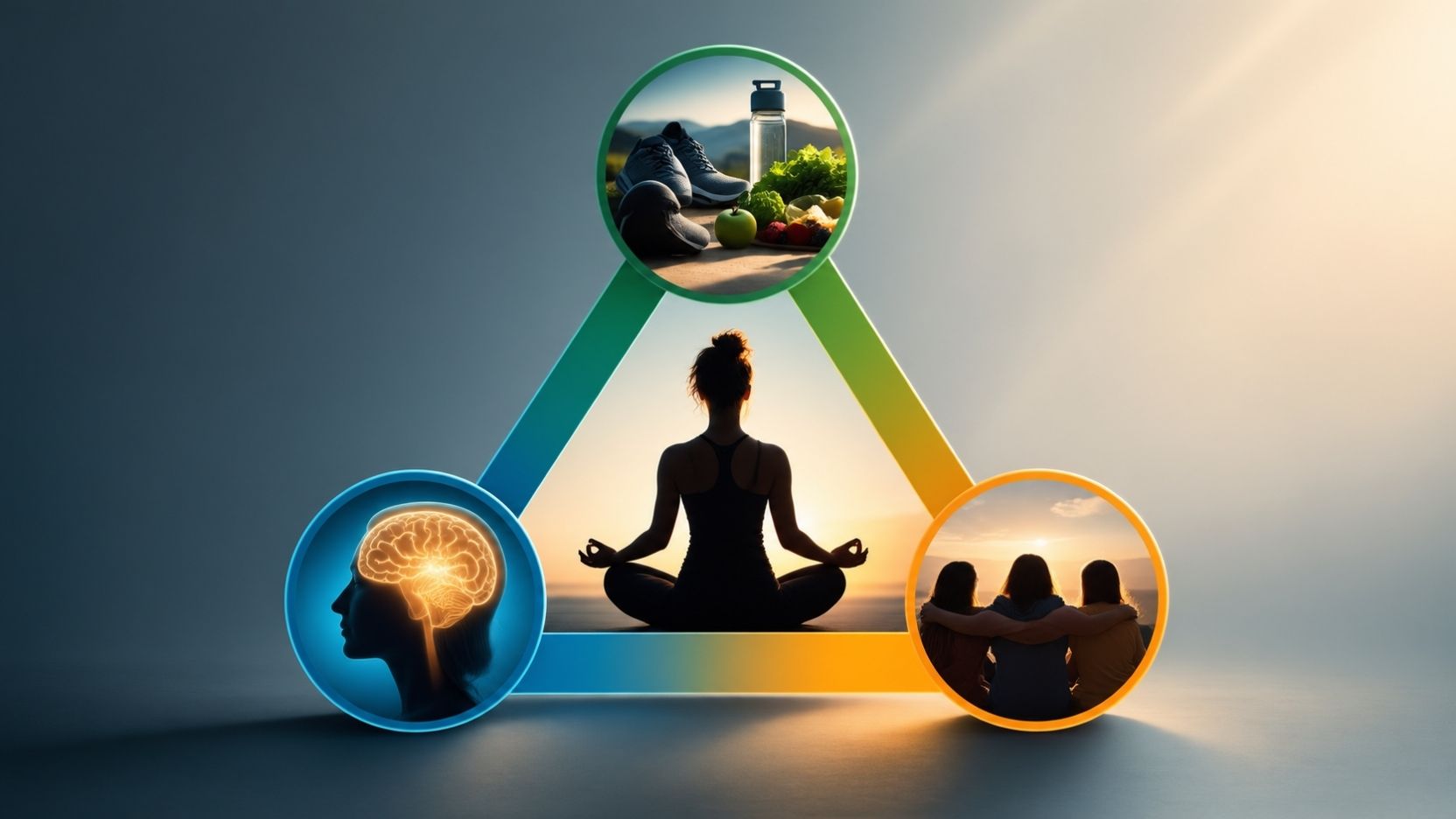
The wellness triangle is a simple model that explains health as three connected parts: physical health, mental or emotional health, and social health. Most versions picture a literal triangle, with each side representing one part. When all three sides are strong, a person is considered balanced and well. When one side weakens, the whole shape becomes unstable.
You may also see this idea called the health triangle, the health triad, or a total wellness triangle. Some organizations, like Boulder Crest Foundation, use their own version built around a person’s spirit, mind, body, and finances. Others, in classroom settings, use it as a teaching tool with printable worksheets.
This guide walks through what the wellness triangle actually measures, where the idea came from, how each side works, and how to use it in real life, in school, or in a workplace wellness program.
Where the Idea of a Wellness Triangle Comes From
The core idea behind the wellness triangle traces back to how health experts define health itself. The World Health Organization has long defined health as a state of complete physical, mental, and social wellbeing, not simply the absence of disease. That three part definition is the foundation almost every version of the triangle builds on.
Some health education sources trace the visual triangle format specifically to a classroom project, reportedly created in an Alaskan middle school in the late 1990s, that later spread through school health curriculums across the United States. That origin story is repeated often online, though it is difficult to verify through a single authoritative record, so it is worth treating as a commonly cited background rather than a confirmed historical fact.
What is well documented is how widely the model is now used. Health teachers, school counselors, public health campaigns, veteran support organizations, and workplace wellness programs all rely on some version of this triangle to explain that health is more than physical fitness alone.
What Does the Wellness Triangle Measure?
At its core, the wellness triangle measures balance across three areas of life rather than a single score. It does not produce one number. Instead, it asks a person to look honestly at three separate questions:
- How well is my body functioning right now?
- How stable and resilient do I feel emotionally?
- How connected am I to other people?
A person can score high in one area and low in another. Someone might train for marathons yet feel isolated and lonely. Someone else might have a rich circle of friends yet ignore basic sleep and nutrition. The triangle exists to make those blind spots visible.
The Three Sides of the Wellness Triangle
Most classroom and public health versions of the wellness triangle use the same three sides: physical, mental or emotional, and social. Below is a closer look at each one.
Physical Health: The Body Side
Physical health covers how well the body functions day to day. It is usually the side people think of first when they hear the word health.
Key factors that shape physical health include:
- Regular movement and exercise
- Balanced, nutrient dense eating
- Enough consistent sleep
- Routine medical and dental checkups
- Avoiding tobacco, excess alcohol, and drug misuse
Strong physical health supports steady energy, a more resilient immune system, and a lower risk of chronic disease over time.
Mental and Emotional Health: The Mind Side
This side covers thoughts, emotions, coping skills, and how a person handles stress. It shapes decision making, relationships, and daily productivity.
Signs that this side of the triangle is strong include:
- A generally stable mood
- Healthy ways of coping with stress
- A realistic, positive sense of self
- The ability to sit with difficult emotions without being overwhelmed by them
Practices like therapy, journaling, mindfulness, and setting boundaries at work all strengthen this part of the triangle.
Social Health: The Connection Side
Social health is about the quality of a person’s relationships and their sense of belonging. It is often the most overlooked side of the triangle, yet research consistently links strong social ties to longer life and fewer mental health struggles.
Ways to support social health include:
- Spending real, undistracted time with family or close friends
- Joining a group, class, team, or place of worship
- Volunteering in the local community
- Asking for help when it is needed instead of withdrawing
How the Three Sides Actually Interact
The three sides of the wellness triangle are not separate boxes. They constantly influence each other.
| Wellness Triangle Side | Weakens When | Often Affects |
| Physical | Poor sleep, inactivity, poor diet | Mood, energy, focus |
| Mental and Emotional | Chronic stress, untreated anxiety, burnout | Motivation to exercise, willingness to socialize |
| Social | Isolation, loneliness, conflict | Stress levels, unhealthy coping habits |
A short example makes this clearer. Someone going through a stressful divorce, a mental and emotional strain, may stop exercising, a physical decline, and pull away from friends, a social decline. One weak side pulled the other two down with it. The reverse is also true. Joining a weekly walking group can improve physical fitness, provide social contact, and reduce stress, all from a single habit.
The Wellness Triangle vs the Wellness Wheel
People researching the wellness triangle often come across a related idea called the wellness wheel, sometimes called the wheel of life. The wheel typically breaks wellbeing into more categories, often six or eight, including things like career, finances, and environment, and asks a person to shade each slice according to satisfaction.
The triangle and the wheel share the same underlying goal: showing that life has multiple dimensions and that focusing on only one leads to imbalance. The triangle is simpler and easier to teach quickly, which is why schools favor it. The wheel offers more nuance for adults working through a personal or career coaching exercise. Neither model is more correct than the other. The right choice depends on whether you want a quick, memorable check in or a more detailed audit of your life.
Using the Wellness Triangle in a Workplace Program
Employers increasingly borrow the wellness triangle framework for workplace wellness initiatives, even outside of formal health education. A workplace version typically maps to:
- Physical: on site fitness stipends, standing desks, walking meetings, and health screenings
- Mental and emotional: access to an employee assistance program, mental health days, and manageable workloads
- Social: team building activities, mentorship programs, and a culture that discourages constant after hours messaging
A common mistake in workplace wellness programs is investing heavily in the physical side, such as gym memberships, while ignoring the mental and social sides. An employee who is physically active but burned out and isolated at work is still an unbalanced triangle. Programs that address all three sides tend to see better engagement than those built around a single perk.
Common Mistakes People Make With the Wellness Triangle
A few patterns show up repeatedly when people try to apply this model to their own lives.
Treating one side as optional. It is common to assume mental or social health is a nice to have compared to physical health. The interconnected nature of the triangle means neglecting either side eventually shows up in the others, often through fatigue, irritability, or declining physical health itself.
Chasing a perfect score on every side at once. Trying to overhaul physical, mental, and social health simultaneously usually leads to burnout within a few weeks. It is generally more sustainable to strengthen the weakest side first, then move to the next.
Using the triangle only once. A worksheet completed for a single class assignment or a single new year resolution loses most of its value if it is never revisited. The model works best as a recurring check in, not a one time exercise.
Confusing busyness with social health. Being surrounded by people at work or in a large group chat is not the same as feeling genuinely connected. Social health is about quality and depth of connection, not the number of interactions in a day.
How Different Life Stages Change the Triangle
The wellness triangle does not stay static across a lifetime. What each side needs shifts as circumstances change.
For students, the physical side often centers on sleep and screen habits, the mental side on academic pressure and self esteem, and the social side on navigating friendships and peer pressure.
For working adults, the physical side often competes with long work hours, the mental side deals with career stress and caregiving responsibilities, and the social side can shrink quickly once people have less unstructured free time.
For older adults, the physical side may involve managing chronic conditions, the mental side can involve adjusting to retirement or loss, and the social side becomes especially important, since research links social isolation in older age to a higher risk of cognitive decline.
Recognizing which stage you are in helps explain why a generic wellness plan does not always fit. A worksheet built for a teenager, for example, will look different from a check in used in a corporate wellness program or a veteran support setting.
Health Triangle vs Wellness Triangle: Is There a Difference?
In everyday use, health triangle and wellness triangle refer to the same three part model. Some educators prefer the word health because it matches the WHO definition directly. Others prefer wellness because it emphasizes an active, ongoing process rather than a fixed state.
A small number of organizations use wellness triangle to describe an entirely different, branded framework. It is worth knowing these exist, since a search for the term can surface more than one meaning.
Boulder Crest’s Wellness Triangle for Veterans
Boulder Crest Foundation, a nonprofit known for its Warrior PATHH program and the book “Struggle Well,” uses its own wellness triangle framework with combat veterans and first responders. According to Boulder Crest program materials, this version centers on a person’s spirit, mind, body, and finances, and is used to help veterans manage stress and build a stable foundation during recovery from trauma. Founders Ken Falke and Josh Goldberg have discussed this framework publicly, including during a webinar on staying balanced through the COVID nineteen pandemic.
Other Wellness Triangle Frameworks You May Encounter
A handful of wellness brands and independent authors have published their own three part models under a similar name, often centered on physical, nutritional, and emotional or spiritual wellness. These are typically proprietary frameworks tied to a specific book, program, or company, rather than the widely taught school health model. If you come across one of these while researching, check whether the source is a public health organization, a school curriculum, or a private brand, since the meaning and the recommended actions can differ.
The Health Triangle in Schools: Worksheets and Projects
Health teachers commonly use the wellness triangle as a hands on classroom activity. A typical health triangle project or worksheet asks students to do a few simple things.
- Draw a large triangle and label each side physical, mental, and social.
- Rate themselves, often on a scale from one to ten, on each side.
- Shade or color each side according to their rating.
- Write one or two specific goals for the side that scored lowest.
A basic health triangle drawing does not need to be complicated. A simple equilateral triangle with three labeled sides is enough. Some teachers ask students to draw the triangle unevenly, with longer or shorter sides based on their self assessment, so the shape visually reflects where they are out of balance.
Building a Wellness Triangle Worksheet
If you are creating your own printable worksheet, useful sections to include are:
- A blank triangle diagram for labeling and shading
- A short rating scale for each of the three sides
- A few reflection questions, such as what is one thing you could change this week
- A goal setting box for the weakest side
Search results for a wellness triangle PDF often point to school district health curriculum pages or teacher resource sites such as Teachers Pay Teachers. If you need one for a class, checking your district’s health curriculum portal first is usually faster than searching generally, since many districts already provide an approved version.
Health Triangle Food: Eating for the Physical Side
Food is one of the most concrete, actionable parts of the physical side of the wellness triangle. A balanced approach generally includes:
- A variety of vegetables and fruits across the week
- Whole grains rather than only refined grains
- Lean protein sources, including plant based options
- Healthy fats, such as those from nuts, seeds, and olive oil
- Consistent hydration throughout the day
Rather than chasing a perfect diet, most public health guidance focuses on consistency and variety over time. A single unhealthy meal will not break the physical side of the triangle, and a single healthy one will not fix months of poor habits. What matters is the general pattern.
What Are Specific Actions Teens Can Take to Improve Their Wellness?
Teenagers face unique pressures across all three sides of the triangle, from school stress to social media comparison. Specific, realistic actions include:
For physical health:
- Aim for eight to ten hours of sleep, since teens generally need more than adults
- Limit screen time close to bedtime
- Get outside for movement, even a short daily walk
For mental and emotional health:
- Name the emotion before reacting to it
- Talk to a trusted adult, counselor, or therapist when stress feels unmanageable
- Take breaks from social media if it consistently affects mood
For social health:
- Prioritize a few close, trustworthy friendships over a large number of surface level ones
- Get involved in a club, sport, or activity outside of school hours
- Have at least one regular, phone free conversation with family each week
A school counselor or health teacher can help a teen turn any of these into a concrete goal for a health triangle project or personal wellness plan.
Building Your Own Wellness Triangle
Whether or not you use a formal worksheet, you can build a personal version quickly.
Step 1: Rate Each Side Honestly
Give yourself a rough score from one to ten on physical, mental and emotional, and social health. Be honest rather than aspirational. This is a starting point, not a report card.
Step 2: Identify the Weakest Side
Most people already sense which side needs the most attention before they even finish the rating. Trust that instinct, then confirm it with the numbers.
Step 3: Pick One Small, Specific Action
Choose a single change rather than an overhaul. A ten minute daily walk, one weekly phone call to a friend, or a consistent bedtime is more sustainable than a complete lifestyle rebuild.
Step 4: Reassess Every Few Weeks
Wellness shifts over time. A monthly check in, using the same simple rating scale, shows whether your changes are actually moving the needle.
Signs Your Wellness Triangle Is Out of Balance
A few common warning signs can show up when one or more sides of the triangle are neglected.
- Constant fatigue despite adequate sleep
- Irritability or a short temper that feels out of character
- Skipping plans with friends or family repeatedly
- Relying on food, alcohol, or screens to manage stress
- A sense of going through the motions without real engagement
None of these signs alone means something is seriously wrong. But when several show up together over weeks rather than days, it is a reasonable prompt to look at which side of the triangle needs support, and whether a conversation with a doctor, counselor, or therapist would help.
Wellness Triangle Examples From Everyday Life
Seeing the model applied to real situations often makes it easier to understand than reading definitions alone. A few short examples:
The new parent. Physical health drops due to interrupted sleep. Mental health is strained by the adjustment to a new routine and identity. Social health often shrinks as free time disappears. A small, realistic fix might be a single scheduled hour each week with a partner or friend, protecting at least one side from collapsing entirely.
The remote worker. Physical health can suffer from a sedentary setup and blurred work hours. Mental health may be affected by isolation disguised as independence. Social health often weakens without the casual daily contact an office provides. A simple fix is scheduling short walks that double as calls with a friend, addressing two sides of the triangle at once.
The college student. Physical health competes with late nights and irregular meals. Mental health is tested by academic pressure and, for many, being away from a familiar support system for the first time. Social health can go either direction, expanding through new friendships or shrinking through homesickness. Campus health centers and counseling offices exist specifically to support this stage.
The retiree. Physical health may involve managing a chronic condition rather than building fitness from scratch. Mental health can be affected by a loss of daily structure or purpose after leaving a career. Social health often needs the most active attention, since work relationships naturally fade. Volunteering, classes, or regular family contact tend to be the most protective habit here.
These examples share a pattern. In nearly every case, the fix that helps the most is not the one that requires the most time or money. It is the smallest change that happens to touch more than one side of the triangle at once.
Why the Triangle Model Is Still Useful Today
Critics sometimes point out that health is more complex than three categories, and that is a fair point. Some updated models add a fourth or fifth side, such as spiritual or financial health, similar to Boulder Crest’s version built around spirit, mind, body, and finances. Even so, the simplicity of the three sided version is exactly why it has stayed popular in classrooms and public health campaigns for decades. It gives people, especially students, a quick and memorable way to check whether they are focused entirely on one area of life while ignoring the others.
Key Takeaways
The wellness triangle is a straightforward tool, not a medical diagnosis. It reminds you that physical fitness alone does not equal wellness, and that emotional and social health deserve the same ongoing attention. Rate yourself honestly across the three sides, pick one small area to improve, and revisit the exercise regularly rather than treating it as a one time worksheet.
Talking to a Professional About an Unbalanced Triangle
Self assessment tools like the wellness triangle are useful for reflection, but they are not a substitute for professional care. If the mental and emotional side of your triangle has been consistently low for weeks, especially alongside changes in sleep, appetite, or the ability to function at work or school, it is worth speaking with a doctor or a licensed therapist rather than relying only on a self rating.
The same applies to the physical side. A worksheet can highlight that something feels off, but only a healthcare provider can properly evaluate symptoms like ongoing fatigue, unexplained pain, or major changes in weight or appetite. Treat the triangle as a starting point for a conversation, not a diagnostic tool.
If you are supporting a veteran, first responder, or someone recovering from trauma, organizations like Boulder Crest specialize in structured, evidence informed programs rather than a single worksheet, and are a more appropriate resource for that level of need.
A Simple Weekly Check In Routine
For anyone who wants to use the wellness triangle beyond a single classroom exercise, a short weekly routine tends to work better than an occasional deep dive. Here is one version that takes a few minutes:
- On a Sunday evening or Monday morning, rate each side of the triangle from one to ten based on the past week.
- Write down one specific thing that helped the highest scoring side and one thing that hurt the lowest scoring side.
- Choose one small action for the coming week that targets the lowest side specifically.
- At the end of the week, note whether that action actually happened, without judgment if it did not.
Over a few months, this creates a simple record of which side of your triangle tends to slip first under stress, which is often more useful than any single snapshot rating.
Frequently Asked Questions
What is the wellness triangle?
The wellness triangle is a model showing health as three connected parts: physical, mental and emotional, and social. Balance across all three, rather than strength in just one, defines overall wellness.
What are the three sides of the wellness triangle?
The three sides are physical health, mental or emotional health, and social health. Some specialized versions, such as Boulder Crest’s veteran focused model, use different or additional categories like spirit and finances.
What does the wellness triangle measure?
It measures relative balance across physical, mental, and social wellbeing rather than producing a single overall score. It highlights which area of life may need more attention.
Is the health triangle the same as the wellness triangle?
Yes, in most educational and public health contexts, health triangle and wellness triangle describe the same three part model. A few private brands use the wellness triangle name for their own separate framework.
What are examples of activities for each side of the wellness triangle?
Physical examples include exercise, sleep, and balanced eating. Mental and emotional examples include therapy, journaling, and stress management. Social examples include spending time with friends, volunteering, and joining community groups.
How do I create a health triangle drawing for a class project?
Draw a triangle and label each side physical, mental, and social. Rate yourself on each side, then shade or size the sides to reflect your self assessment, and add one goal for the weakest area.
Where can I find a wellness triangle worksheet or PDF?
Many school district health curriculum pages and teacher resource sites offer printable versions. Checking your own school or district health education page is usually the fastest way to find an approved worksheet.
What specific actions can teens take to improve their wellness?
Teens can prioritize consistent sleep, limit screen time before bed, talk to a trusted adult about stress, and build a small number of close, dependable friendships rather than chasing a large social circle.
What is Boulder Crest’s version of the wellness triangle?
Boulder Crest Foundation, known for its Warrior PATHH program for veterans, uses a wellness triangle framework centered on spirit, mind, body, and finances to help participants build a stable foundation during recovery from trauma.
Why is social health part of the health triangle?
Research consistently links strong social connections to lower stress, better immune function, and reduced risk of depression and anxiety, which is why social health is treated as equally important to physical and mental health.
Can one side of the wellness triangle affect the others?
Yes. The three sides are interconnected rather than separate. For example, poor sleep, a physical issue, often lowers mood and motivation to socialize, showing how one weak side can pull down the others.
Is there an official medical definition of the wellness triangle?
There is no single official medical definition, but the three part structure closely follows the World Health Organization’s long standing definition of health as complete physical, mental, and social wellbeing, not merely the absence of disease.
How often should I reassess my wellness triangle?
A weekly or monthly check in works well for most people. Frequent enough to catch a slipping area early, but not so frequent that the exercise feels like a chore.
What is the difference between the wellness triangle and the wellness wheel?
The wellness triangle uses three broad categories, physical, mental, and social, while the wellness wheel typically breaks life into more categories, such as career and finances. The triangle is simpler and more common in schools, while the wheel offers more detail for personal or coaching use.
Can the wellness triangle be used in the workplace?
Yes. Many workplace wellness programs map their offerings, such as fitness stipends, employee assistance programs, and team building, onto the same three sides to make sure no single area of employee wellbeing is neglected.