
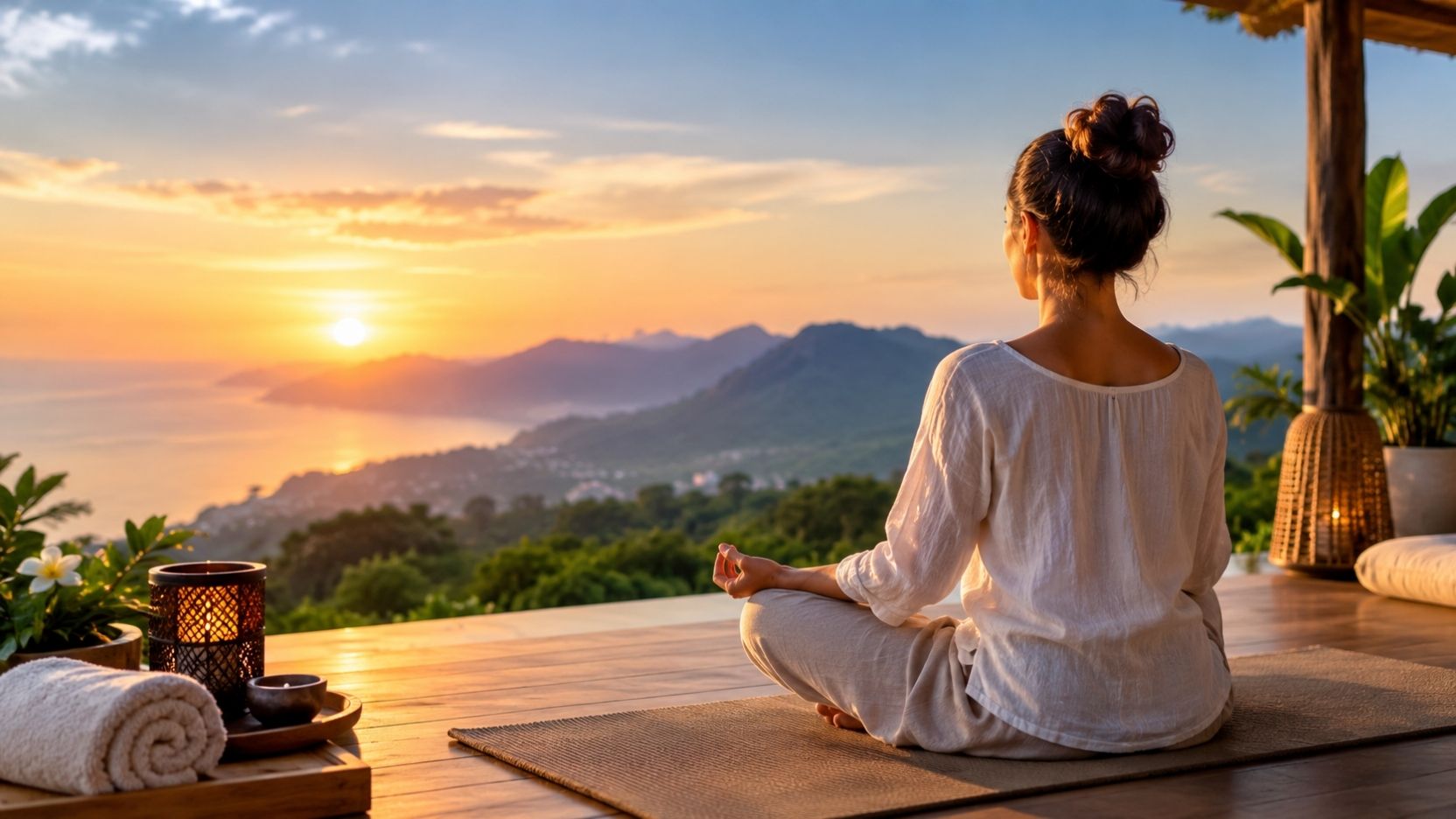
A women’s wellness retreat is a multi-day getaway, usually women-only or women-led, built around rest, movement, and mental or emotional health rather than sightseeing. Most programs blend yoga, meditation, nourishing meals, and small-group support in a calm setting away from daily responsibilities. Prices generally run from around $200 for a weekend to well over $5,000 for a luxury, all-inclusive week.
That’s the short version. The rest of this guide walks through what these retreats actually involve, how much they cost at different tiers, how they differ for younger women versus women over 50, what “mental health retreat” really means in this context, and how to find one near you without getting talked into something that isn’t a fit.
What Exactly Is A Women’s Wellness Retreat?
A women’s wellness retreat is a structured getaway designed around a woman’s physical, mental, and emotional health, usually held in a women-only or women-focused group setting. It’s different from a standard spa vacation because the goal is intentional change, not just a few days of pampering.
Programs typically combine:
- Daily yoga, pilates, or another guided movement practice
- Breathwork or meditation sessions
- Meals built around whole, often locally sourced food
- Small-group workshops or women’s circles
- Time with a therapist, coach, or wellness practitioner
- Free time for rest, nature walks, or spa treatments
The “for women” part isn’t just marketing. These trips are built around experiences many women share, including caregiving loads, hormonal shifts, burnout, and a desire for a space that feels safe and free of judgment. Retreat leader Tina Haapala has described the appeal this way: attending a women’s retreat gives participants room to be themselves without the pressure of being watched or judged by men.
Most US-based retreats run three to seven days, and they welcome people at every experience level, from first-timers who have never done a guided meditation to seasoned retreat-goers looking for their next reset.
Read More: Sexual Wellness
Why More Women Are Choosing This Kind of Trip Right Now
Interest in this category has grown quickly, and the wellness travel industry has taken notice. Established retreat brands are expanding their women-only offerings, and new properties built specifically for female travelers are opening across the country, including a large ranch-style wellness property outside Austin scheduled to open in late 2026.
A few forces are driving the demand:
- Burnout and caregiving fatigue. Many women are managing careers, households, and caregiving simultaneously, with little built-in recovery time.
- Hormonal transitions. Perimenopause and menopause have become much more openly discussed, and retreats now address them directly instead of treating them as a taboo subject.
- A wish for genuine connection. Group settings let women share experiences with people navigating similar life stages, something a solo vacation can’t replicate.
- Rising awareness of mental health. More women are treating a retreat as preventive self-care rather than something reserved for a crisis.
None of this means a retreat is a cure-all. It’s one tool among many, and it works best when it’s chosen deliberately rather than impulsively.
The Different Types of Women’s Wellness Retreats
Not every retreat serves the same purpose. Knowing the main categories makes it much easier to pick one that actually fits what you need.
| Retreat Type | What It Focuses On | Best For |
| Yoga and meditation retreats | Daily guided yoga, breathwork, stress management workshops | Beginners and anyone easing into the format |
| Spiritual and healing retreats | Sound baths, women’s circles, journaling, emotional processing | Grief, life transitions, or deeper emotional work |
| Detox and nutrition retreats | Planned nourishing meals, cooking education, habit resets | Anyone wanting to rebuild eating and lifestyle habits |
| Fitness and adventure retreats | Hiking, strength training, movement-based activities | Women who relax best through physical activity |
| Mental health–focused retreats | Licensed therapy, coping-skill training, structured support | Burnout, anxiety, or a supported reset with clinical input |
| Life-stage retreats (menopause, postpartum, midlife) | Hormonal health, body literacy, life transitions | Women navigating a specific biological or life stage |
Many retreats blend two or three of these categories rather than sticking to just one, so read the daily itinerary closely before booking.
What a Typical Day Actually Looks Like
Retreat schedules vary, but a fairly common daily rhythm looks like this:
- Early morning movement, such as yoga or a guided walk
- A nourishing breakfast, often with a nutrition or mindfulness talk built in
- A workshop, therapy session, or skills-based activity mid-morning
- Free time, spa treatments, or a nature excursion in the afternoon
- A group circle, meal, or creative activity in the evening
- Wind-down time, sometimes including a sound bath or breathwork session
Organizers usually build in deliberate breaks between activities so guests can step away and rest if they need to, rather than filling every hour of the day.
How Much Does a Women’s Wellness Retreat Cost?
Cost is one of the biggest variables in this category, and it depends heavily on location, length, and whether clinical mental health care is involved.
| Retreat Tier | Typical Price Range | What’s Usually Included |
| Community or DIY-style day retreat | $50–$300 | A single day of workshops, meals, and group activities |
| Weekend retreat (2–3 days) | $300–$2,000 | Lodging, meals, guided sessions, some free time |
| Week-long immersive retreat | $800–$6,000 | Full board, daily programming, therapy or coaching |
| Luxury or all-inclusive retreat | $3,000–$10,000+ | Private accommodations, spa treatments, personalized care |
| Clinical mental health retreat (residential) | $1,500 per week and up, sometimes billed monthly | Licensed therapy, psychiatric support, structured treatment |
International destinations, particularly in Bali, Thailand, and parts of Latin America, often offer significantly lower prices for a comparable week-long program because of lower local costs for lodging and staff.
Note on insurance: Retreats built purely around relaxation or spa services are almost never covered by health insurance. If a program includes licensed therapy or is considered medically necessary residential treatment, part of the cost may be reimbursable. Always confirm this directly with the retreat and your insurer before booking.
Mental Health Retreats For Women: What Makes Them Different
A mental health retreat for women is not the same as a relaxing weekend away, even though the two overlap. These programs are built around evidence-based therapeutic practices, not just mindfulness and spa time.
Women face some mental health pressures that differ from men’s, including mood changes tied to pregnancy, postpartum recovery, and perimenopause, on top of caregiving demands and higher documented rates of anxiety and depression. A well-run mental health retreat addresses this with licensed clinicians on staff, not just wellness coaches.
Before booking a mental health–focused retreat, look for:
- Licensed therapists or counselors on-site, not only life coaches
- A clear emergency and crisis protocol
- Reasonable group sizes that allow individual attention
- Transparency about whether the program is a supplement to ongoing care or a replacement for it
- A requirement (for many programs) that you be medically stable before attending
If you’re currently in crisis or have active suicidal thoughts, a wellness retreat is not the appropriate resource. Please reach out to a licensed mental health professional or a crisis line first.
Red Flags In A Mental Health Retreat
Be cautious of any program that:
- Has no licensed clinicians involved despite marketing “therapy”
- Promises a cure or permanent fix
- Discourages you from continuing medication or outside treatment
- Offers no plan for follow-up support once the retreat ends
- Can’t produce verifiable staff credentials when asked
Wellness Retreats for Women Over 50: What Changes at This Stage
Retreats aimed at women over 50 tend to shift focus toward hormonal health, metabolic changes, bone density, and the emotional side of a major life transition. Some programs specifically target the years around menopause, while others are framed more broadly as a “next chapter” experience for women aged roughly 50 to 65.
Common elements include:
- Personalized health assessments covering hormones, metabolism, and cardiovascular markers
- Nutrition guidance adjusted for post-50 metabolic changes
- Hormone-focused education, sometimes alongside medical staff
- Community and peer support with women in a similar life stage
Guests who have attended menopause-specific retreats often describe the peer connection as just as valuable as the clinical information, particularly the experience of finally feeling heard after difficulty getting taken seriously by doctors. Most retreats in this category recommend at least five to seven nights to see meaningful benefit, though shorter three- to five-night options exist for a first-time visit.
What About Younger Women? Retreats Built for Your 20s and 30s
Retreats for younger women tend to lean more heavily into fitness, adventure, career-stress relief, and social connection rather than hormonal health. Expect more hiking, strength-based movement, and workshops on topics like burnout, boundary-setting, or navigating early-career pressure.
These retreats are often shorter and more budget-friendly than the luxury programs aimed at older demographics, though pricing still varies enormously based on location and amenities.
All-Inclusive vs. À La Carte: What “All-Inclusive” Really Means
“All-inclusive” gets used loosely in retreat marketing, so it’s worth checking the fine print. At minimum, it should cover lodging and all meals. Beyond that, coverage varies widely.
Ask specifically whether these are included or billed separately:
- Airport transfers
- Spa treatments and massages
- Excursions or off-site activities
- One-on-one sessions with a therapist or coach
- Gratuities for staff
- Alcohol or specialty beverages
A genuinely all-inclusive retreat should give you a full breakdown before you pay a deposit. If a company is vague about what’s covered, treat that as a reason to ask more questions, not a reason to assume the best.
Read More: Nutrition And Wellness
Finding a Women’s Wellness Retreat Near You
If you’re searching for something closer to home rather than an international trip, a few approaches work better than a generic search:
- Search by region plus retreat type, such as “yoga retreat for women” or “menopause retreat” plus your state, rather than a broad city name alone.
- Check retreat directories. like retreat aggregator sites, which let you filter by location, length, price, and focus area.
- Ask local yoga studios and wellness centers. Many run their own weekend retreats or partner with retreat centers within driving distance.
- Look at state tourism or wellness travel sites, since many states now promote wellness tourism as part of their travel marketing.
- Read recent reviews carefully. Because the wellness industry is largely unregulated, reviews and verified credentials matter more here than in most travel categories.
For travelers in the Midwest, including Michigan and Wisconsin, look for retreat centers near lakes, forests, or rural farmland, since many smaller women’s retreats in this region use exactly that kind of quiet, nature-based setting rather than a resort property.
In Colorado, mountain towns and the areas around Boulder and the Rockies host a concentration of yoga and adventure-focused retreats that take advantage of hiking trails and elevation. In Ontario, look toward cottage country and the areas north of Toronto for similar nature-based programs.
Because specific retreat businesses open, close, and change ownership often, it’s worth confirming current details, licensing, and reviews directly with any provider before booking, rather than relying solely on what shows up first in a search.
Going Farther: International Options in Bali, Scotland, and Beyond
For women willing to travel further, a few destinations have become especially well known for women’s wellness programming.
Bali has a dense concentration of women’s retreats, often combining healing ceremonies, spa treatments, and pool time with cultural excursions. Programs here, such as those run by Goddess Retreats in Seminyak, tend to lean into a slower, more indulgent pace compared to fitness-heavy Western retreats.
Tuscany and other parts of Italy attract retreats built around farmhouse stays, foraging walks, and cooking classes layered with meditation and movement, an approach used by operators like Coherence Retreats.
Scotland offers a different flavor entirely, with retreats set in the Highlands or near the coast that emphasize outdoor movement, cold-water exposure, and quiet, restorative surroundings rather than luxury spa amenities.
Costa Rica is popular for retreats that combine yoga with rainforest or beach settings, often at a lower price point than comparable European programs.
International retreats can sometimes be more affordable than a comparable US program once you factor in lower local costs for lodging and staff, even after adding flights, so it’s worth comparing total cost rather than nightly rate alone.
Women-Only vs. Women-Focused: An Important Distinction
These terms get used interchangeably, but they aren’t the same thing.
- Women-only means every guest and often every instructor is a woman, with no exceptions during your stay.
- Women-focused means the programming is designed around women’s needs, but the property may also run mixed-gender or family retreats on other dates.
If privacy and an entirely female environment matter to you, confirm the exact dates you’re booking are women-only, not just check that the retreat center generally serves women.
How to Choose the Right Retreat for You
Before booking, get clear on a few things:
- Your primary goal. Rest, fitness, a mental health reset, or support through a life transition each point toward different programs.
- Group size. Smaller retreats, sometimes capped around 10 to 12 guests, offer more individual attention. Larger retreats often cost less per person.
- Budget, including hidden extras. Confirm what’s covered before comparing prices across retreats.
- Staff credentials. If therapy or clinical support is advertised, ask for licensing details directly.
- Location and travel time. A retreat only helps if getting there and back doesn’t add more stress than it removes.
- Reviews from recent guests, ideally from the last year, since staff and quality can change.
What To Pack And How To Prepare
Most retreats recommend:
- Comfortable, layerable clothing suited to the local climate
- Sturdy walking or hiking shoes if outdoor activity is part of the program
- A journal, since many retreats include reflective writing
- A lightweight day bag for excursions or hikes
- Any medications you take regularly, along with a list for staff in case of emergency
If you’re attending a retreat with a mental health or medical component, coordinate with your own clinician beforehand, especially if you take medication or are managing an ongoing condition.
Is It Worth The Money? What The Research Says
Research on structured wellness retreats has found measurable short-term improvements in stress, sleep, and general well-being, with some benefits persisting for six weeks or longer after guests return home. That’s a meaningful result, but it’s not permanent, and a retreat works best as part of an ongoing routine rather than a one-time fix.
The honest way to evaluate whether it’s worth it: a retreat is more likely to pay off if you have a clear goal, choose a program matched to that goal, and follow through with some of what you learn once you’re back to normal life. It’s less likely to help if you’re expecting it to solve a problem on its own.
Read More: Wellness Activities
The Bottom Line
A women’s wellness retreat can range from a $75 local day event to a $10,000 luxury week, and the right choice depends entirely on what you actually need right now. Mental health–focused programs require licensed clinical staff, not just good marketing. Retreats for women over 50 tend to center on hormonal and metabolic health, while those for younger women lean toward fitness and career-stress relief.
Wherever you’re looking, whether that’s a quiet lakeside retreat in Michigan or a week in Bali, take the time to verify credentials, confirm what’s genuinely included, and choose a program built around your actual goals rather than the most appealing photos.
Frequently Asked Questions
What is a women’s wellness retreat exactly?
It’s a multi-day getaway, usually women-only, that combines movement, meditation, nourishing meals, and group or individual support to improve physical and mental well-being.
How much does a women’s wellness retreat cost?
Prices range from around $50 for a single day event to over $10,000 for a luxury, all-inclusive week. Most weekend retreats fall between $300 and $2,000.
Are women’s wellness retreats covered by insurance?
Generally no, unless the program includes licensed clinical mental health treatment considered medically necessary. Confirm coverage with your insurer before booking.
What’s the difference between a wellness retreat and a mental health retreat?
A mental health retreat includes licensed therapists and structured, evidence-based treatment. A general wellness retreat focuses on relaxation, movement, and mindfulness without clinical care.
Are women’s wellness retreats only for women dealing with a crisis?
No. Most guests attend for stress relief, a routine reset, or preventive self-care rather than an active crisis.
What should I bring to a women’s wellness retreat?
Comfortable layered clothing, sturdy shoes, a journal, and any regular medications, along with a list of them for staff in case of emergency.
Are women’s wellness retreats safe for beginners?
Yes. Most programs, especially yoga and meditation retreats, are designed to welcome first-timers with no prior experience.
How do I find a women’s wellness retreat near me?
Search using your state or region plus the retreat type you want, check retreat directories, and ask local yoga studios or wellness centers about upcoming programs.
What does “all-inclusive” actually cover at a retreat?
At minimum, lodging and meals. Spa treatments, excursions, one-on-one sessions, and gratuities may or may not be included, so always ask for a full breakdown.
Do retreats for women over 50 focus mainly on menopause?
Many do include hormonal health, but most also cover nutrition, bone density, metabolic health, and the broader emotional side of this life stage.
Is a women-only retreat the same as a women-focused retreat?
Not always. Women-only means every guest is a woman during your stay. Women-focused means the programming targets women’s needs, but the property may host mixed-gender retreats on other dates.
How long should a first wellness retreat be?
Three to five nights is a common recommendation for a first-time visit, with five to seven nights suggested for retreats focused on deeper hormonal or emotional work.